

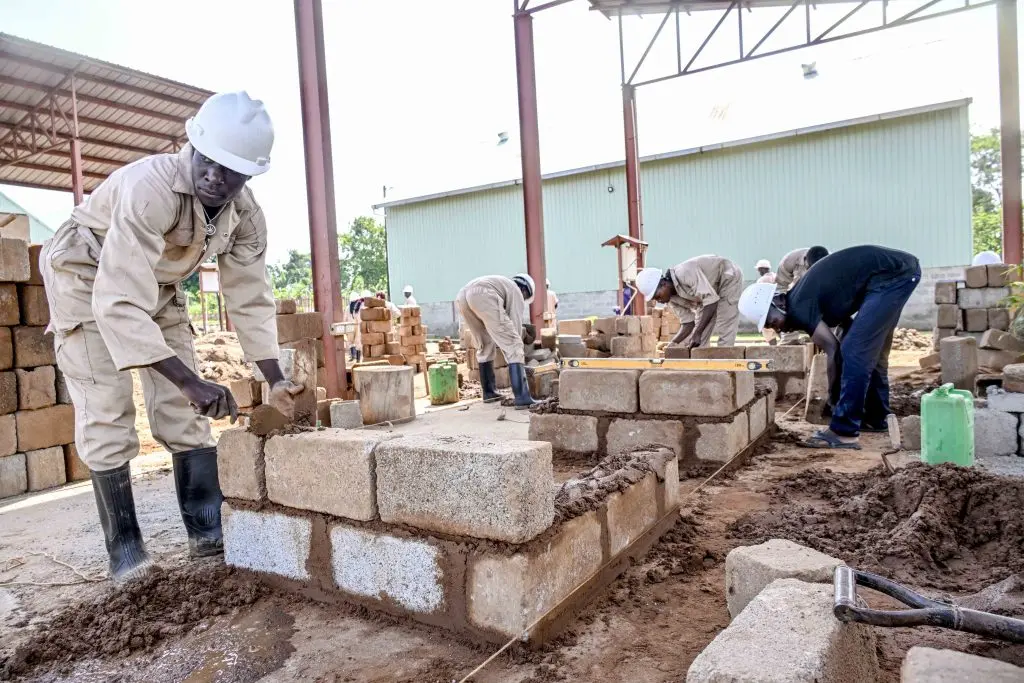
Across East Africa, youth mobility has become a visible feature of contemporary labour markets. Young people move from rural areas to cities, cross borders in search of work, and combine multiple informal jobs to sustain their livelihoods. But this mobility has not translated into economic security. While East African economies have expanded and regional integration has deepened, productive employment has not kept pace with the region’s rapid demographic growth.
Over the last two decades, East African economies have improved, but this expansion has not generated sufficient productive, stable employment. Instead, the region shows a pattern of mobility without economic transformation: people move within countries, across sectors, and across borders, yet often see little improvement in economic security or upward social mobility.
Uganda has one of the youngest populations in the world, with a median age of approximately 17 years, while Tanzania’s median age is around 18 years. In East Africa, young people constitute the majority of the population, creating both a demographic opportunity and an urgent employment challenge. Every year, millions enter labour markets that are already struggling to generate sufficient productive employment.
While labour is becoming more mobile, productivity gains have not kept pace. Workers often move across locations and occupations without experiencing substantial improvements in earnings, job quality, or economic security.
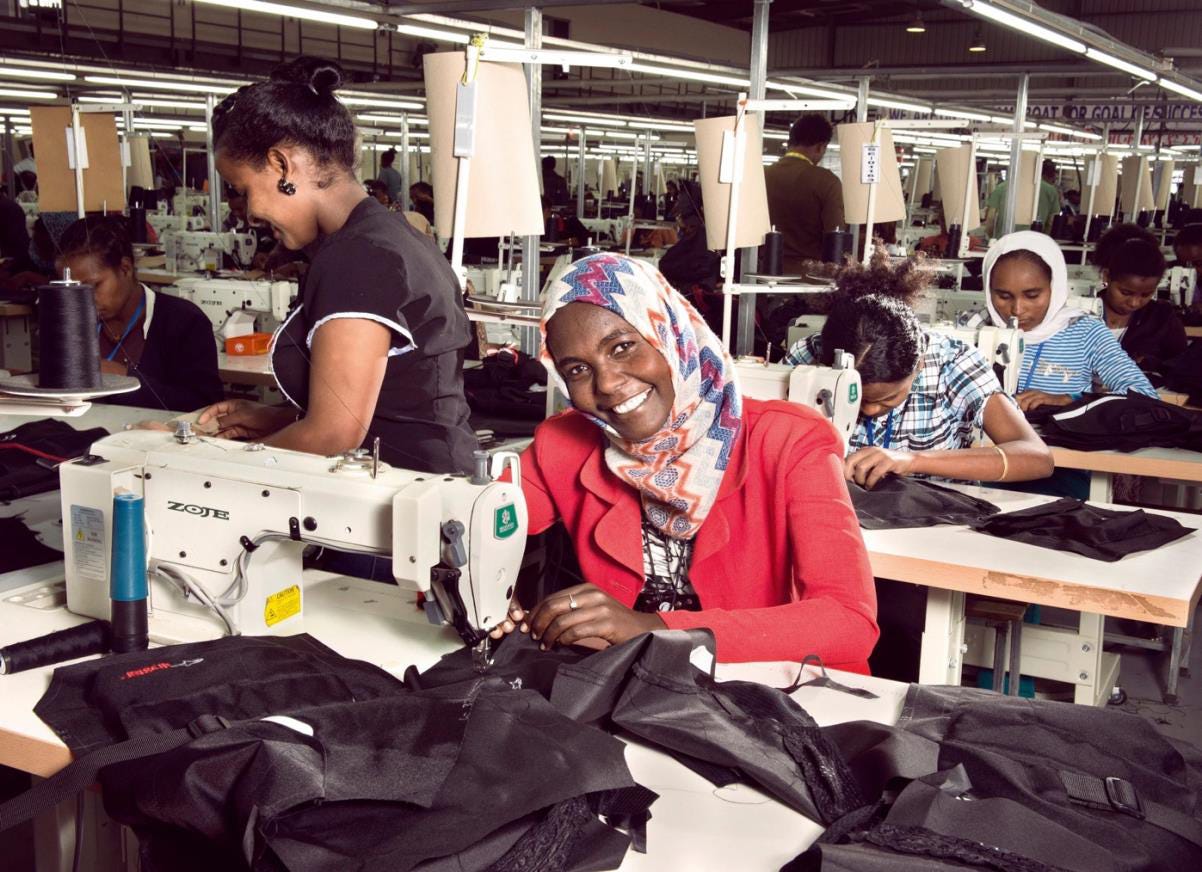
East African economies have expanded through services such as telecommunications, banking, and finance, construction and extractive industries. These sectors may lift GDP, but they do not absorb labour at the scale the region needs. Despite investments in industrial parks and manufacturing initiatives in Ethiopia, which have generated tens of thousands of jobs, the impact is small compared to the millions of young people entering the labour market each year. Industrial employment has not grown rapidly enough to absorb the region’s expanding labour force. The result is a familiar but dangerous pattern: growth without enough jobs. Jobless growth.
Agriculture is the largest employer across much of East Africa and still employs more than half of the workforce in Ethiopia, Uganda, and Tanzania, but the sector’s productivity growth in these countries has been relatively slow. As a result, many young people leave rural areas in search of better opportunities, only to find themselves entering other low-productivity activities elsewhere in the region.
According to the African Development Bank, Africa’s private sector creates only about 3 million formal jobs annually to accommodate the more than 12 million young people entering the workforce each year. Much of the region’s workforce is concentrated in the informal economy. Estimates place informal employment at more than 85 per cent of total employment across Africa, highlighting how limited the formal sector remains as a source of secure work.
The consequences of this structurally weak employment system are visible across East Africa’s fast-growing cities, from Nairobi and Addis Ababa to Kampala, Dar es Salaam, and Kigali. Africa is urbanising rapidly, yet industrialisation is lagging. As rural livelihoods come under pressure, millions of young people move into urban labour markets where informal trade, low-paid construction work, transport services, and platform-based gig work dominate employment opportunities.
According to UN-Habitat projections, Africa’s urban population is expected to double by 2050. Cities such as Nairobi, Kampala, and Dar es Salaam continue to absorb large numbers of young migrants each year, often faster than infrastructure, housing, and formal employment opportunities can expand.
Migration is often understood as movement between places with different economic opportunities. In much of East Africa, this movement is more often a survival strategy. In East Africa, migration does not automatically produce upward economic mobility; it simply relocates insecurity. Workers move across regions, cities, and occupations, but many are trapped in low-productivity activities that offer limited opportunities for sustained income.
The East African Community (EAC) promulgated the Common Market Protocol to facilitate the free movement of labour across member states and deepen regional integration. In practice, differences in labour regulation, occupational accreditation, administrative procedures, and worker protections hinder seamless movement. Recent regional policy efforts have acknowledged these gaps, particularly around qualification recognition, social protection portability, and labour migration governance.
Data from the United Nations Economic Commission for Africa (UNECA) suggest that the African Continental Free Trade Area (AfCFTA) could substantially increase intra-African trade. The critical question is whether increased trade will translate into productive employment. Without stronger regional value chains in agro-processing, textiles, pharmaceuticals, and light manufacturing, the agreement risks facilitating commerce without transforming productive capacity.
From Kenya and Ethiopia’s technology sectors to the wider region, online freelancing, ride-hailing services, platform work, and social-media-driven enterprises are opening new ways to earn an income. Most of these digital jobs do not provide stable contracts, health benefits, paid leave, or meaningful worker protections. They may widen access to work, but they rarely resolve the deeper problem of precarious livelihoods.
This concern is reinforced by the growing policy emphasis on youth entrepreneurship as a response to unemployment. While entrepreneurship can support innovation and local economic development, it cannot substitute for a broad-based structural transformation that creates stable employment at scale. In many contexts, entrepreneurship is survival-oriented, concentrated in highly competitive and low-productivity markets where access to capital, infrastructure, clients, and reliable demand is limited. This challenge is compounded by the absence of a strong “missing middle” in many East African economies. While microenterprises are widespread, and a small number of large firms dominate key sectors, relatively few medium-sized enterprises have the capacity to generate employment at scale. Now, more young people have risen to the challenge and started businesses, but are trapped at the microscale, because the preconditions and structures that support enterprise survival and growth do not exist.
Climate change has become an additional driver of labour market distress across East Africa. Recurrent droughts, land degradation, water scarcity, and agricultural shocks continue to undermine rural livelihoods. Between 2020 and 2023, the Horn of Africa experienced one of its worst droughts in decades, affecting millions of people across Ethiopia, Kenya, Somalia, and neighbouring countries. These disruptions have forced growing numbers of rural residents to migrate to towns and cities, further straining urban labour markets that already struggle to absorb new entrants.

The employment challenge also carries important political implications. Persistent unemployment and underemployment can undermine confidence in public institutions, deepen social frustration, and intensify demands for economic inclusion. In a region with one of the world’s youngest populations, employment creation is both an economic objective and a governance imperative. Youth-led protests in Tanzania, Uganda and Kenya highlight the growing connection between economic exclusion, governance, and public trust. As East Africa’s youth population expand, employment outcomes will define the legitimacy and performance of public institutions.
These trends point to a deeper problem of insufficient productive transformation in East Africa despite economic expansion. Entrepreneurship, digital work, and regional integration are often presented as solutions. They are rather symptoms of a labour market that has not generated enough productive, stable employment. None of them can substitute for the development of labour-intensive industries capable of creating jobs at scale.
Governments need a more focused policy agenda. They should prioritise industrialisation and manufacturing that can absorb large numbers of workers, invest in agro-processing and regional value chains that raise productivity and create higher-value jobs, and strengthen labour governance to protect workers in both informal and digital labour markets.
Welcome to the Conversation
Hildana Mesai | Research Associate
Foreign Africa