


Why has one of Africa’s most economically advanced and diplomatically influential states repeatedly struggled to reconcile domestic insecurity with the ideals of continental solidarity that helped secure its own liberation?
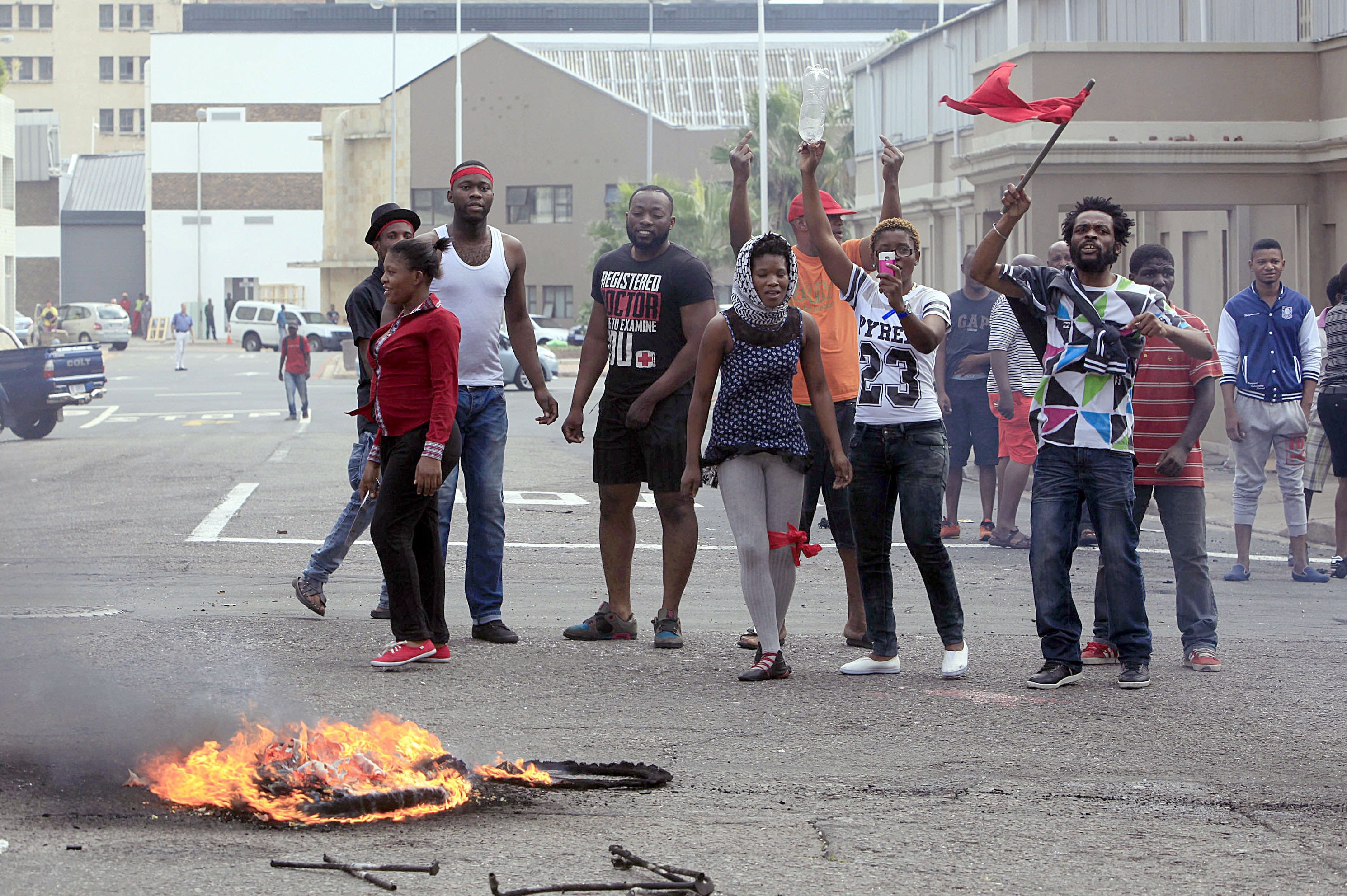
Few countries embody the contradictions of post-colonial Africa as acutely as South Africa. Celebrated globally as the “Rainbow Nation” following its democratic transition in 1994, the country has also become the site of recurrent anti-African violence. Waves of xenophobic attacks in 2008, 2015, 2019, and again in 2026 have challenged the post-apartheid narrative of reconciliation and exposed enduring tensions beneath South Africa’s democratic transformation.
Conventional explanations attribute xenophobia to unemployment, poverty, or criminal opportunism. While such factors contribute to understanding the phenomenon, they do not adequately explain its recurrence, geographical concentration, or political mobilisation. Xenophobia is not an isolated social grievance; it is a political expression of deeper structural inequalities, institutional failures, and contested notions of belonging.
Three interconnected dynamics drive contemporary anti-African violence in South Africa. First, apartheid’s socio-spatial legacy continues to reproduce stark inequalities and relative deprivation. Second, weaknesses in local governance have intensified competition over scarce resources while eroding confidence in state institutions. Third, the ideals of Pan-African solidarity that supported South Africa’s liberation have gradually given way to narrower forms of national identity. Together, these forces convert economic insecurity into organised hostility, undermining both South Africa’s social cohesion and Africa’s broader integration project.
To understand why xenophobic mobilisation has become a recurring feature of South African politics, it is necessary to examine the historical foundations of inequality that continue to shape the country’s economic and social landscape.
South Africa’s contemporary political economy is shaped by the institutions established under colonial rule and consolidated during the mineral revolution of the late nineteenth century. The expansion of the gold and diamond industries produced an extractive economic system that relied on a large supply of cheap, tightly controlled African labour. Although mining generated immense wealth, it also entrenched racialised labour arrangements that concentrated economic gains while excluding African workers from meaningful social and political participation.
This system relied heavily on migrant labour recruited from across Southern Africa, particularly present-day Lesotho, Eswatini, Mozambique, and Malawi. Workers were housed in segregated compounds and subjected to strict controls on movement, residence, and political participation. Migration was not intended to promote regional integration; it was organised to satisfy the labour demands of an extractive economy while denying workers meaningful social and civic inclusion.
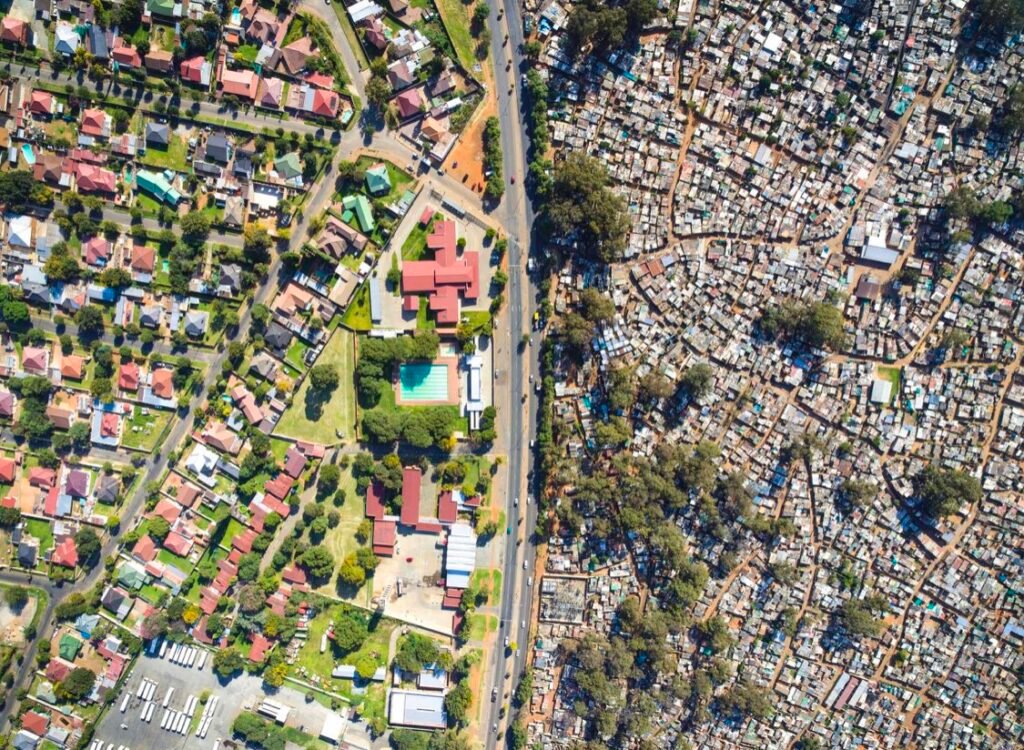
The formal consolidation of apartheid after 1948 deepened these arrangements through an extensive system of spatial control. The 1913 Natives Land Act had already dispossessed Black South Africans of most productive agricultural land, while subsequent legislation, the Group Areas Act (1950), and the Bantustan policy, systematically relocated millions into geographically isolated townships and underdeveloped ethnic homelands. Employment opportunities concentrated in predominantly white urban centres, while Black communities were confined to peripheral areas characterised by inadequate infrastructure, weak public services, and limited economic mobility.
Although apartheid formally ended in 1994, the structures underpinning economic inequality proved remarkably resilient. Democratic reforms expanded political rights but were less successful in transforming inherited patterns of wealth ownership and spatial exclusion. Large disparities in income, education, and access to economic opportunity continue to reflect apartheid-era geography. South Africa remains one of the world’s most unequal societies. According to the World Bank, the country’s Gini coefficient is approximately 0.63, indicating exceptionally high income inequality globally.
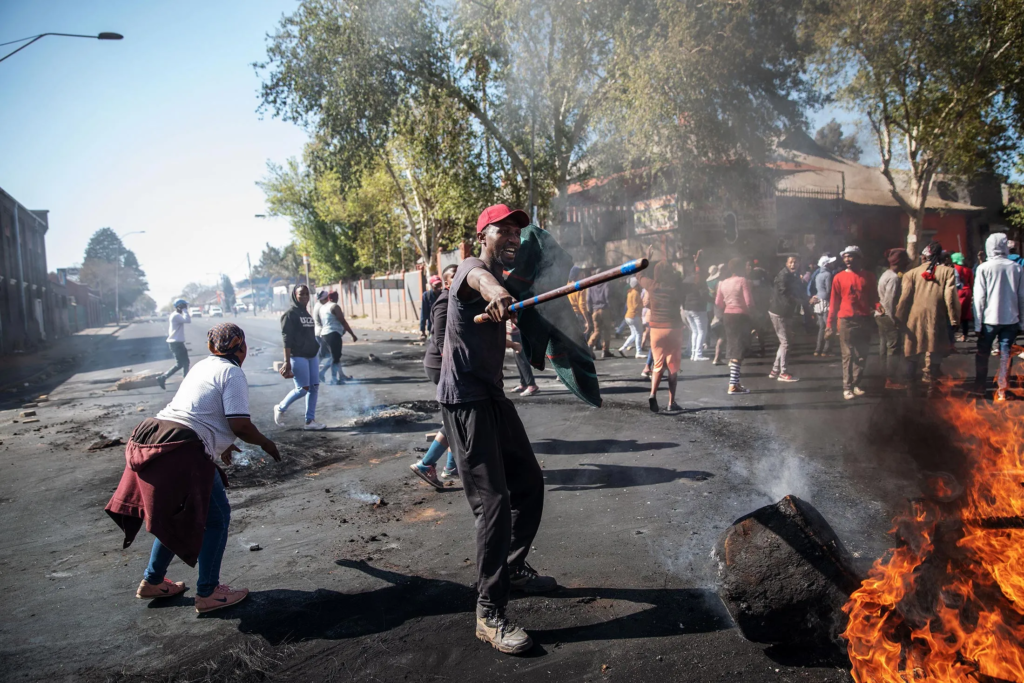
The consequences of South Africa’s unequal development are most visible in townships and peripheral settlements where economic opportunities are limited and public services are often inadequate. Long commutes, weak transport infrastructure, limited industrial investment, and systemic failures in service delivery increase the costs of economic participation while reducing the prospects for upward mobility. At the same time, youth unemployment is among the highest in the world. The situation worsened in 2026 when the economy shed approximately 345,000 jobs, according to Statistics South Africa (Stats SA), the country’s official statistical agency, further worsening insecurity and reinforcing perceptions of economic scarcity.
These conditions have widened the gap between democratic expectations and lived reality. Many South Africans expected political liberation to be accompanied by broad-based economic inclusion. Instead, large segments of the population continue to face unemployment, poverty, and declining public services. In this environment, narratives that attribute economic hardship to foreign nationals gain political resonance.
Yet inequality alone does not produce xenophobia. Many societies experience poverty and unemployment without recurring violence against migrants. Structural inequality creates frustration, but that frustration becomes politically consequential only when it is redirected toward identifiable groups and embedded within narratives of competition and exclusion.
As the region’s largest economy, South Africa attracts substantial cross-border migration. Foreign nationals are readily visible in these informal urban economies, operating spaza shops, transport services, food businesses, and small construction enterprises. Their visibility makes them convenient targets for claims that migrants are responsible for job shortages, declining wages, or pressure on public services, even when the underlying causes lie elsewhere.
The process unfolds cumulatively. Structural inequality generates insecurity; political narratives transform that insecurity into resentment; and identity-based claims recast economic competition as a question of national belonging. Xenophobic violence thus emerges not as a spontaneous reaction to hardship but as the outcome of broader social and political processes that channel frustration toward vulnerable populations.
If inequality creates the conditions for xenophobic mobilisation, the question remains why violence repeatedly erupts in particular communities rather than uniformly across the country. The answer lies partly in the capacity of local institutions to manage economic insecurity, deliver services, and maintain public trust.
Historical inequality helps explain the social conditions that make xenophobia possible, but it does not specify why violence repeatedly erupts in some communities and not others. The crucial mediating factor is the capacity of local institutions. Municipal governments are the primary interface between citizens and the state, responsible for service delivery, housing, infrastructure maintenance, local economic development, and the regulation of informal economic activity. When these institutions fail, public frustration increasingly seeks alternative targets.
Post-apartheid municipalities inherited systemic spatial inequalities and uneven administrative capacity. Although democratic reforms expanded local government’s developmental mandate, implementation has fallen short. Successive reports by the Auditor-General of South Africa have documented weaknesses in financial management, procurement, infrastructure maintenance, and service delivery. Water shortages, unreliable electricity supply, deteriorating roads, inadequate waste management, and housing backlogs have become recurring features of governance in many townships and informal settlements.
In these environments, economic competition is increasingly perceived as a zero-sum contest. When opportunities are scarce and public institutions are unable to meet expectations, migrants become highly visible targets in already-constrained local economies. This has contributed to perceptions that non-national African migrant entrepreneurs benefit disproportionately from local economic opportunities, despite the reality that many operate under highly precarious conditions characterised by limited access to finance, insecure tenure, and regulatory uncertainty. Political entrepreneurs, vigilante organisations, and sections of the political establishment have exploited these perceptions by portraying foreign nationals as the primary cause of unemployment, crime, and declining public services.
The events of 2026 illustrate this dynamic. Failures in water provision, sanitation infrastructure, electricity supply, and municipal administration created conditions of deep public frustration across several urban communities in Gauteng province. Within these governance vacuums, organisations such as Operation Dudula assumed quasi-enforcement roles by conducting unauthorised identity inspections, demanding proof of citizenship, and targeting businesses operated by foreign African nationals. Although lacking legal authority, such groups drew legitimacy from widespread perceptions that the state had failed to protect citizens’ economic interests.
These developments should be understood as symptoms of a broader crisis of state legitimacy. Where citizens lose confidence in public institutions to manage migration, regulate local economies, and deliver essential services, non-state actors claim the authority to determine who belongs within the political community. Xenophobic mobilisation thus becomes both a consequence of institutional decline and a mechanism through which accountability is redirected away from the state.
The policy implications are significant. Strengthening border controls or tightening immigration enforcement may offer politically attractive solutions, but such measures cannot address the underlying drivers of xenophobic mobilisation. Long-term solutions require capable local institutions, reliable service delivery, expanded economic opportunities, and renewed public trust in democratic governance. Without these reforms, cycles of frustration, scapegoating, and violence are likely to persist regardless of changes in migration policy.
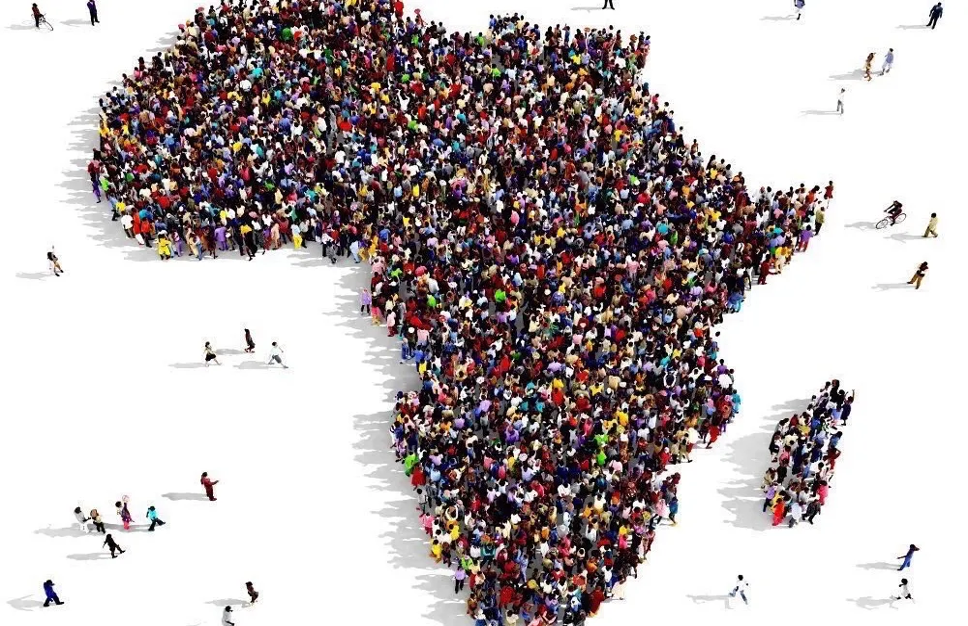
South Africa’s xenophobic violence exposes a central contradiction in Africa’s integration project. The country’s liberation was made possible through organised continental solidarity. Recurrent xenophobic violence undermines confidence in labour mobility, weakens regional cooperation, complicates the implementation of the African Continental Free Trade Area, and raises scepticism about the Agenda 2063’s vision of an integrated Africa.
The South African experience illustrates a wider lesson for the continent. Regional integration cannot be secured solely through continental treaties, trade agreements, or declarations of political solidarity. Integration is experienced in municipalities, labour markets, schools, transport systems, neighbourhoods, and informal economies where citizens encounter one another in everyday life. If these local spaces are characterised by inequality, institutional weakness, and political exclusion, continental ambitions will continue to confront domestic resistance.
Addressing xenophobia requires more than improved migration management or stronger law enforcement. It demands capable local institutions, accountable governance, inclusive urban development, and economic policies that expand opportunity without scapegoating migrants as competitors for scarce public goods.
Equally important, the new integration framework requires a renewed commitment to Pan-Africanism, not as a symbolic ideal, but as a practical framework for managing mobility, promoting shared prosperity, and strengthening regional cooperation. Ultimately, the future of African integration will depend not only on decisions made in African Union summits or regional trade negotiations, but also on the quality of governance in the communities where questions of belonging, opportunity, and citizenship are negotiated. Until states can deliver both economic inclusion and social belonging, the promise of continental integration will remain politically fragile.
Welcome to the Conversation
————————————–
Gwendoline Nuonzie | Junior Associate
Foreign Africa
Elorm Mawuli-Kwawu | Head, Global Engagement
Foreign Africa