

What Does Ghana’s Experience with the Asian Infrastructure Investment Bank Reveal About Its Prospective BRICS Engagement?
On 6 October 2026, Foreign Minister Samuel Okudzeto Ablakwa announced that Ghana would pursue BRICS partner status, amid growing geopolitical competition and the expansion of alternative forums for international cooperation. The diplomatic rationale is readily understandable, but the economic considerations require closer scrutiny. Do smaller states acquire meaningful influence and economic opportunities through participation, or only gain representation within arrangements shaped by more powerful economies? Differences in market size, financial resources, technological capacity and geopolitical influence determine who sets agendas, who negotiates outcomes and who captures the greatest returns. Participation provides access and representation. It does not guarantee influence, investment or development. Outcomes emerge only when participation is tied to clearly defined national objectives, measurable expectations and the domestic capacity required to secure them.
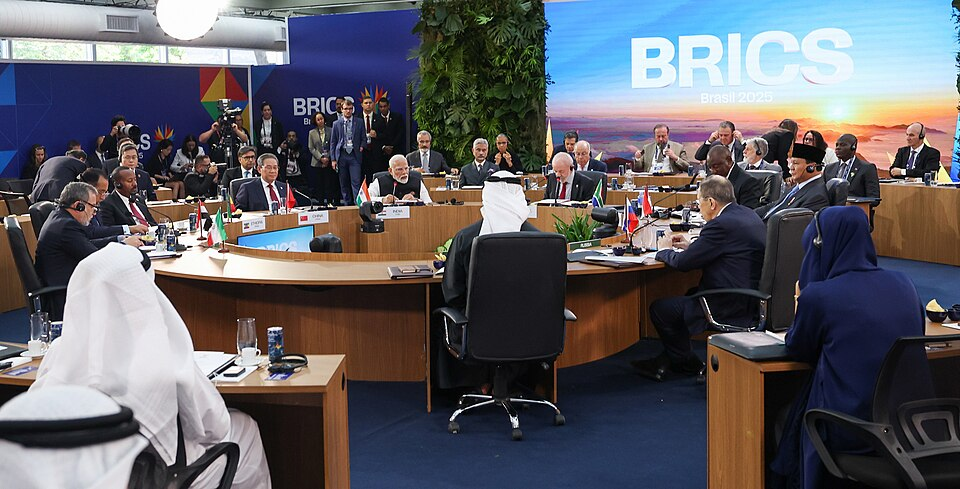
Multipolarity and polarisation are often treated interchangeably. Multipolarity is the diffusion of power across several centres. Polarisation refers to the intensification of geopolitical divisions and competing strategic alignments. For smaller states, this distinction is significant. Multipolarity can expand diplomatic and economic options, whereas polarisation raises the strategic costs of aligning with competing interests. Alternative international institutions do not automatically improve the bargaining position of small states. They may instead create a more competitive environment in which major powers compete for influence while preserving underlying asymmetries in finance, technology, trade and diplomacy.
BRICS exemplifies this reality. Its members possess divergent political systems, economic structures and geopolitical interests. The bloc functions primarily as an informal intergovernmental coordination platform and not as an integrated economic community. It lacks a common market, a common trade regime, a treaty and a unified development strategy. Expansion increases representation without necessarily producing greater economic coherence. Would BRICS participation improve Ghana’s economic bargaining position or multiply the institutions through which structural asymmetries must be negotiated?
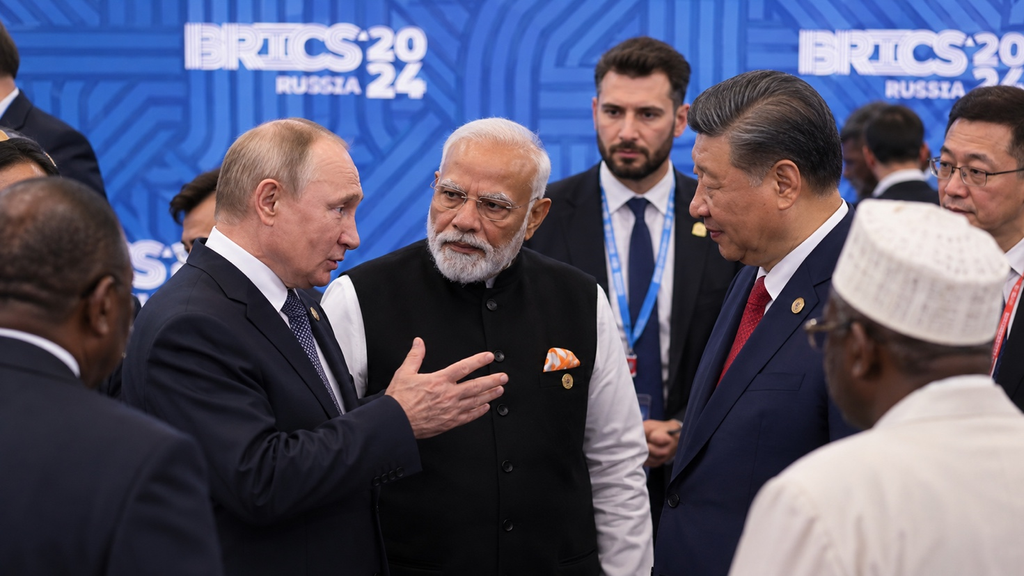
Sovereign equality does not eliminate material inequalities among states. Large economies bring capital, markets, technology, technical expertise and organisational resources. They shape agendas, influence negotiations and absorb risks. Smaller states contribute legitimacy, participation and political support while depending more heavily on multilateral bodies for finance, investment and international visibility.
Such asymmetries reinforce the conditions for what may be termed interest subcontracting, which occurs when a smaller state advances the strategic, diplomatic or economic interests of a more powerful actor while receiving benefits that are disproportionately small relative to the value it contributes. Such arrangements need not be coercive. They often arise through voluntary participation and may enjoy broad domestic support. Their appeal lies in the immediacy of symbolic gains. The limitations become visible only later, when anticipated investments, financing flows, or economic opportunities fail to materialise at the expected scale.
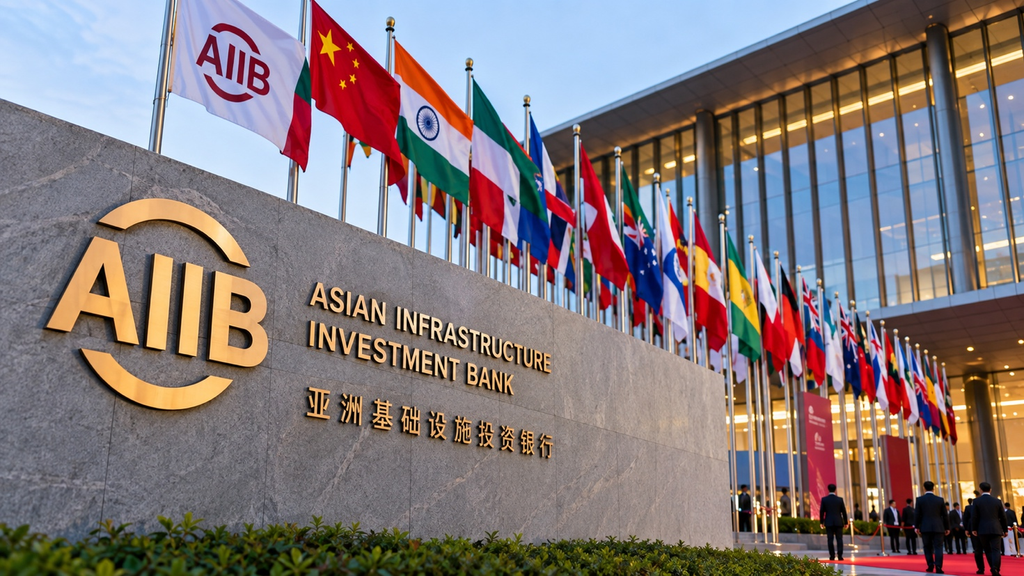
The Asian Infrastructure Investment Bank (AIIB) approved Ghana’s membership on 19 December 2018, with formal membership commencing on 21 February 2020. The decision increased the bank’s approved membership to ninety-three countries and formed part of its broader expansion beyond Asia. According to AIIB’s published membership records, Ghana accounts for approximately 0.005% of the Bank’s total capital subscriptions, reflecting its relatively small financial stake in the institution.
AIIB’s documented African operations have been concentrated elsewhere. The bank describes its €187.4 million [US$ 200 million] financing of Côte d’Ivoire’s Inclusive Connectivity and Rural Infrastructure Project as its first infrastructure operation in Sub-Saharan Africa and notes that its earlier African activities were concentrated in Côte d’Ivoire, Egypt and Rwanda.
A 2024 assessment of the institution’s African project pipeline highlighted investments in Egypt, Madagascar, Morocco and Côte d’Ivoire while outlining plans for broader continental expansion. Ghana has not prominently featured among its published financing commitments. While this observation is striking, it does not establish that membership has produced no benefits. The apparent absence of projects may reflect the bank’s project-selection criteria and investment priorities. Equally, it reveals domestic limitations: project-preparation capacity, fiscal constraints, and the effects of Ghana’s prolonged debt crisis, which may all influence financing decisions.
Expansion can generate political and reputational benefits for the blocs admitting new members. Their geographical representation and claims of global legitimacy may strengthen immediately. For incoming states, economic returns are dependent upon future financing decisions, investment approvals, project implementation and domestic administrative capacity, while the organisation receives immediate institutional legitimacy. New member states risk falling into what may be described as a legitimacy trap. Governments can present participation as an immediate diplomatic achievement even when the economic benefits remain uncertain.
In 2018, the AIIB publicly celebrated Ghana’s admission with five other states as evidence of its growing global reach and rising international profile. The public record provides far less evidence of corresponding economic gains accruing to Ghana. AIIB’s documented financing commitments and project pipeline have largely focused elsewhere.
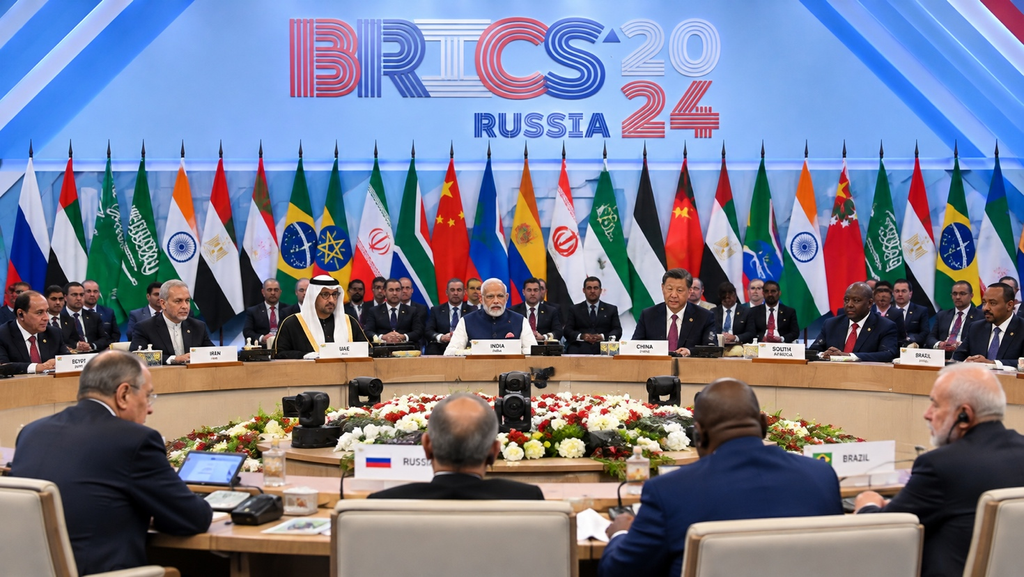
The government’s rationale for pursuing BRICS partner status is credible. Closer ties with emerging economies could contribute to trade diversification, investment attraction, infrastructure development and broader diplomatic influence. The economic value of Ghana’s prospective BRICS participation cannot be inferred from these possibilities; it must be demonstrated.
Participation does not confer prosperity by association. BRICS would not automatically secure preferential market access or investment commitments. BRICS partner status differs fundamentally from membership in the New Development Bank (NDB). Partner status does not guarantee financing. Financing, preferential market access, and investment commitments require separate negotiations, commercially viable opportunities and effective domestic agencies. Although the AIIB and BRICS differ institutionally, Ghana’s experience with the former is a reference point for examining the relationship between international participation and economic returns.
Ghana should adopt a measurable framework for its BRICS participation, setting priority sectors, investment and trade targets, lead agencies and reporting dates. The framework must separate opportunities that BRICS participation creates from investment and trade that existing bilateral arrangements would have produced anyway. Without that separation, diplomatic activity can pass for economic additionality.
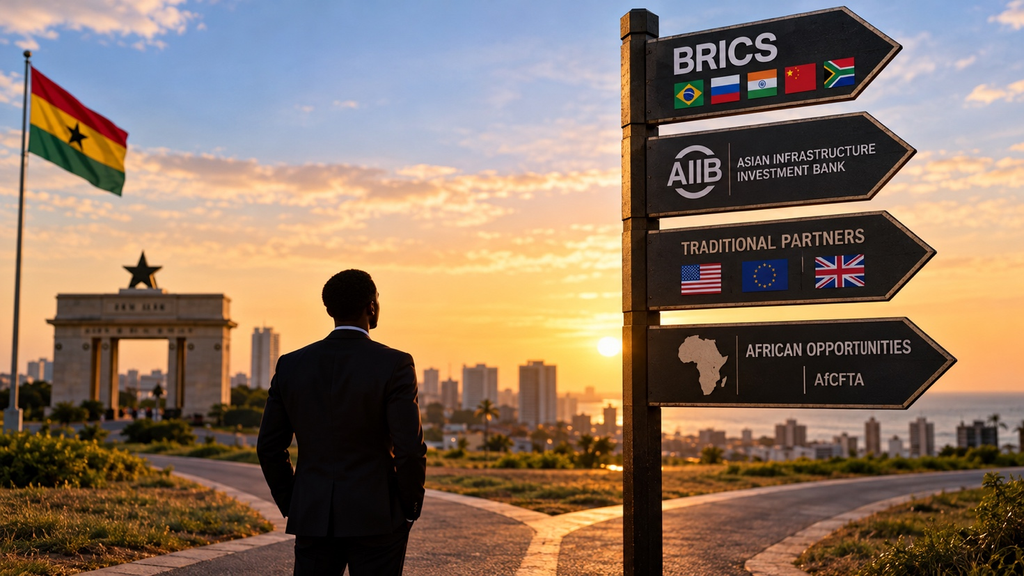
Ghana’s BRICS ambitions expose a recurring dilemma in international cooperation. Inclusion can expand diplomatic opportunities without necessarily altering underlying economic inequalities. The AIIB experience shows the importance of scrutinising developmental returns, though limited publicly identifiable financing does not prove failure. Ghana’s challenge is to convert expanded international access into demonstrable economic gains through stronger negotiating capacity, coordinated institutions and transparent performance measures. Ultimately, assess the value of BRICS participation by its contribution to productive investment, trade diversification, and employment creation, not by the diplomatic symbolism of participation.
Welcome to the Conversation
—————————————-
Elorm Mawuli-Kwawu | Founder & Head of Global Engagement