

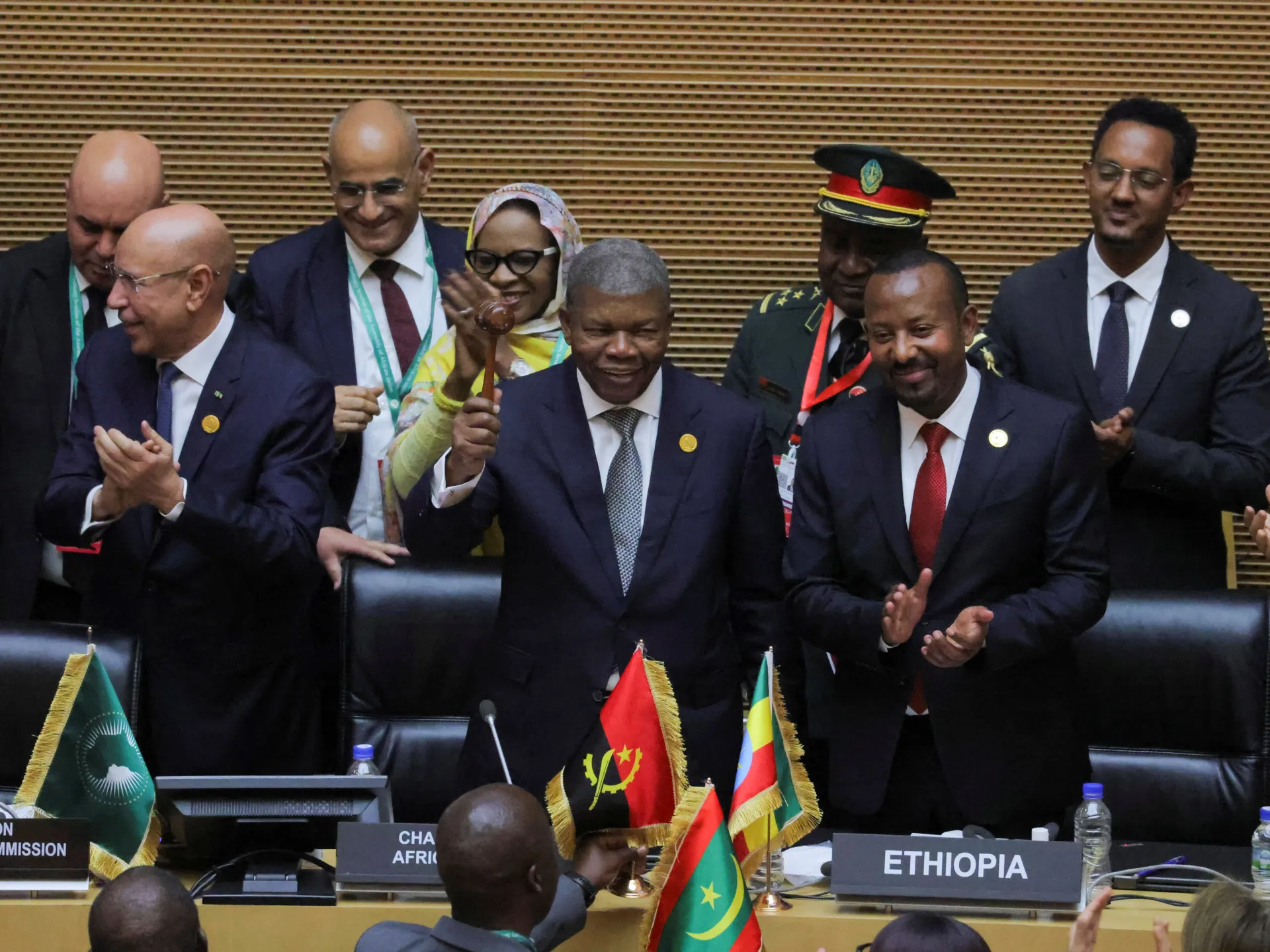
The UN has established a formal framework for reparations, moving it beyond recognition into tangible outcomes will depend on how effectively the African Union mobilises coordination, strategy, and political will across its member states and partners through regionalism and inter-regionalism.
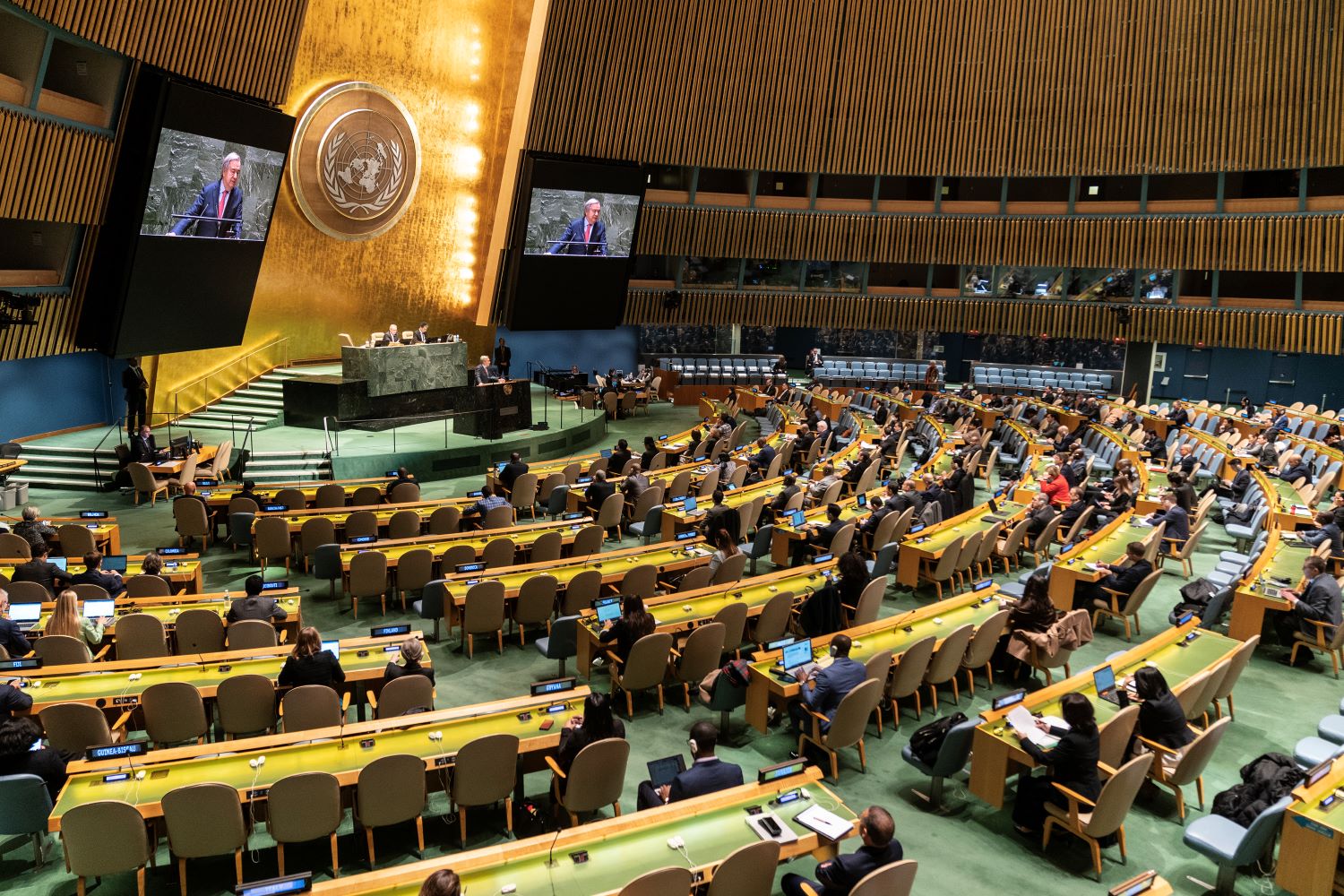
The Declaration of the Trafficking of Enslaved Africans and Racialised Chattel Enslavement of Africans as the Gravest Crime Against Humanity, adopted by the United Nations General Assembly, marks a significant milestone in the global pursuit of historical justice, affirming these acts as the gravest crime against humanity. Yet much of the discourse surrounding the resolution has focused on its symbolic and declaratory significance, masking discussions on implementation routes and policy trade-offs. The true weight of the instrument lies not in its recognition but in its capacity for implementation. In this narrative, paragraphs 10–14, which constitute the operational core of the resolution, outline processes to achieve reparatory justice.

From Symbolism to Implementation
Do these reliefs extend the tradition of symbolic diplomacy that has historically characterised international responses to slavery and its legacies, or do they establish a workable architecture for the realisation of reparatory justice?
The UNGA RESOLUTION A/80/L.48 reframes the fundamental question of reparatory justice. The debate is no longer whether reparations are justified. The resolution has already answered that question: the trafficking of enslaved Africans and racialised chattel enslavement of Africans is declared the gravest crime against humanity, a violation of jus cogens, and not subject to statutory limitations. The operative question becomes, what is being built to deliver reparations?
The adoption of Resolution A/80/L.48 establishes a structured framework for progressive reparatory justice, but its realisation goes beyond its text. The resolution outlines the architecture, and the African Union is expected to ensure it delivers tangible outcomes. Across Reliefs 10 to 14, the decisive factor is not external goodwill or UN coordination, but the AU’s institutional capacity, internal cohesion, and strategic direction.
The Emerging Reparations Architecture
The resolution constructs an emerging policy architecture composed of four pillars: a) legal and normative foundation; b)institutional coordination mechanisms involving the Secretary-General, UN agencies, regional bodies, and Member States; c) tangible redress categories including apology, restitution, compensation, rehabilitation, satisfaction, guarantees of non-repetition, and legal or policy changes; d) and accountability infrastructure through reporting timelines, voluntary contribution frameworks, and educational and cultural restitution mandates.
In programmes and financing under Relief 10, the AU’s role is to transform diverse, donor-driven initiatives into a unified, continent-led agenda. Coordinating development-linked reparations within its architecture impels the AU to design a framework that converts fragmented assistance into a strategic bargaining tool in global economic negotiations.

Under Reliefs 11 and 12, the AU determines how reparations evolve into an epistemic project of intellectual and historical redress. The reconstruction of historical knowledge, reform of educational systems, and development of research infrastructure depend on African leadership to avoid reproducing existing epistemic imbalances.
Relief 13 highlights the AU’s diplomatic significance. Acting as a unified bloc, the AU can aggregate the interests of its member states, align with partners such as CARICOM, and shift reparations from moral appeals to structured geopolitical negotiations.
Relief 14 underscores the AU’s capacity for immediate action. Through educational reforms, memorialisation, and public awareness, the AU and its member states can reshape historical narratives and sustain demand for reparatory justice. This dimension does not depend on external actors, making it the most direct entry point for progress.

The AU as a Decisive Factor
Ultimately, the AU is the decisive anchor. Its capacity determines the effective functioning of its institutions and programmes. The AU’s coordination establishes whether Africa can speak with a unified voice. Its strategic intent shapes how reparations are treated: as a peripheral issue or as an integrated part of the AU’s broader economic, political, and diplomatic agendas. The framework exists; its success depends on whether the AU operationalises it into sustained outcomes.
The dominant question is whether Resolution A/80/L.48 represents continuity or a shift toward implementation. The resolution can be interpreted either way. On one reading, it reflects policy continuity. Its language is non-binding, relying on encouragement rather than obligation, and it introduces no enforcement mechanisms or sanctions. Financial commitments are voluntary, a model that has historically produced more promises than transfers. This aligns with earlier efforts such as the Durban Declaration and Programme of Action, which recognised injustice but failed to generate a comprehensive reparations system. The absence of major former colonial powers among the advocates reinforces this continuity. Arguably, the resolution strengthens recognition but does not alter the structures that have limited reparatory outcomes.
At the same time, a second reading reveals elements of a strategic shift. Unlike earlier declarations, this resolution embeds operational processes within its structure. It mandates coordination within the UN system, establishes reporting timelines, and creates avenues for unilateral and regional action. Affected states can implement measures relating to education, memorialisation, research, and cultural restitution without external approval. The elevation of regional blocs such as the AU and CARICOM introduces a superstructure of geopolitical coordination, transforming reparations from isolated national claims into a cultural turn. This is a big move toward institutionalisation and practical engagement, even if incomplete.
The resolution, therefore, occupies a hybrid position. It is not merely symbolic, as it introduces mechanisms that can produce outcomes. Yet it is not fully transformative because key aspects, particularly financial reparations and formal acknowledgement by colonial powers, are dependent on voluntary cooperation. The resolution makes a strategic shift possible but does not guarantee it.
The most important variable is the role of the African Union. If the AU integrates reparations into broader agendas such as development, trade, and diplomacy, and treats Reliefs 10 to 14 as a coordinated system, the transition toward implementation becomes more feasible. A second determining factor is the response of former colonial powers. Their willingness to engage in dialogue, provide resources, and support restitution will influence the effectiveness of the resolution. However, their non-cooperation no longer completely halts progress, because the resolution enables action that does not depend on their consent.
A third factor is the extent of engagement by civil society, academic institutions, and affected communities. The resolution provides tools, but these must be actively used through advocacy, research, litigation, and public education to transform institutional objectives into outcomes.
In its final assessment, the resolution is best understood as an enabling instrument. It does not in itself deliver reparations or compel compliance. What it does is construct a framework for pursuing reparatory justice through multiple modalities, such as unilateral action, regional coordination, and continued international advocacy. It marks a shift in what is possible, even if it does not guarantee that it will occur.
Continuity or Strategic Shift
The resolution thus sits at a historical hinge. It retains elements of symbolic recognition while introducing the foundations of a new approach grounded in institutional development, cultural inter-regionalism and strategic coordination.

The AU faces limitations in institutional capacity, technical expertise, and coordination across its diverse membership. Sustaining a long-term agenda, such as the 2026–2036 reparations decade, requires continuity that withstands leadership changes and competing priorities. These challenges do not negate the resolution’s potential, but they shape the conditions under which that potential can be realised. In its final synthesis, the resolution is best understood as an instrument of conditional transformation. It reshapes the normative and institutional landscape and provides tools that did not previously exist in such a coordinated form.
The architecture has been constructed and the conditions established, but the transition from possibility to action requires strategic intent, coordinated effort, and long-term commitment. The resolution marks not the conclusion of a process, but the beginning of a more demanding phase in which the responsibility for progress increasingly rests with those positioned to act – and that’s THE AFRICAN UNION.
Welcome to the Conversation
Azanya Abraham Maslow | Legal & PolicyAssociate
Foreign Africa