

Stadiums are the new diplomatic focus for African governments and a growing trend in development cooperation. Stadiums have become powerful symbols of influence and friendship, rising in 40,000 and 60,000 capacities of steel, concrete and grass. In Africa, stadiums have evolved into pluriversal arenas where diplomatic influence, state-making, state-building, and national identity converge.
The Chinese government has constructed more than 100 stadiums in 43 African nations since 1950, emphasising the expansive contours of Chinese diplomacy. These stadium projects are framed by the theory of exchange, or what analysts describe as the Angolan model, where China addresses the infrastructure needs in Africa, including football development, in exchange for strategic acquisitions.
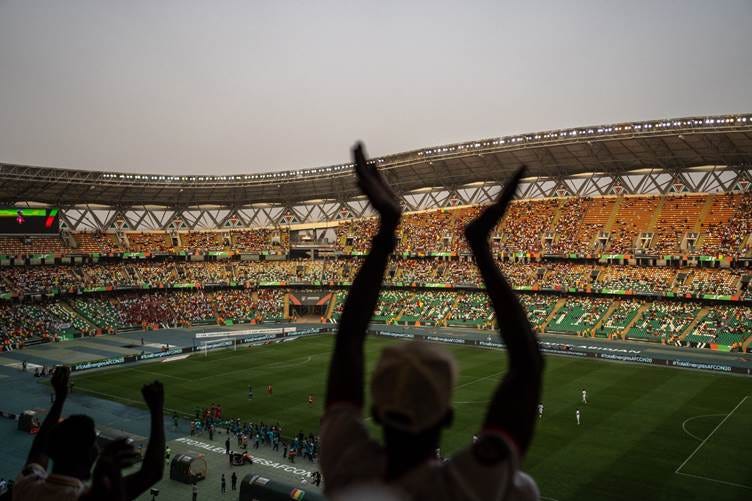
Football is the lifeblood of many communities in Africa. Many stars in Africa played out of community parks before reaching global acclaim. Retired footballers have effigies erected in their names, while children see them as standards of self-realisation. This deep admiration is why football can aggregate and unite communities in Africa. Governments know this and manipulate the construction of sports infrastructure, especially stadiums, for political advantage. In the just-ended 2023 African Cup of Nations. (AFCON), President Alhassan Ouattara stood on the dais in the newly built stadium named after him to celebrate the Ivory Coast’s AFCON win. The glittering floodlights and echoes of jubilant crowds from the new stadium were presented to the international community as a bold sign of social progress and stability after years of protracted civil unrest. For Ivorians and football stakeholders, the new stadium represents the joy and growth of continental football.
Source: New York Times
Despite football’s benefit to households where remittances pay tuition, housing projects, medical bills, and small businesses, many governments cannot fund capital-intensive sporting infrastructure like stadiums or maintain existing ones, leaving facilities decrepit and unworthy. Beijing is helping reverse this decay by investing heavily in sports infrastructure in Africa. China is building “free” stadiums in Africa. African governments welcome these “friendship stadiums” as a massive relief in infrastructure financing, easing domestic budget pressures.
Map of Stadium Diplomacy In Africa
A four-time African Cup of Nations (AFCON) winner, Ghana benefits from Beijing’s magnanimity in African football development. The 15,000 capacity Cape Coast Stadium, funded by Chinese aid, was delivered by China Jiangxi Corporation for International Economic and Technical Cooperation (CJIC) at US $35 million. China also supports renovation work, ensuring the facility meets regional and global standards.
The 60,000-capacity National Heroes Stadium in Zambia, funded by Beijing and inaugurated in 2014, is also one of the many friendship stadiums in Africa. The story is not different in Mozambique. The Estadio do Zimpeto, built in Maputo in 2011, is another Chinese gift. This is a consistent narrative in Chad, Angola, Equatorial Guinea, and Tanzania.
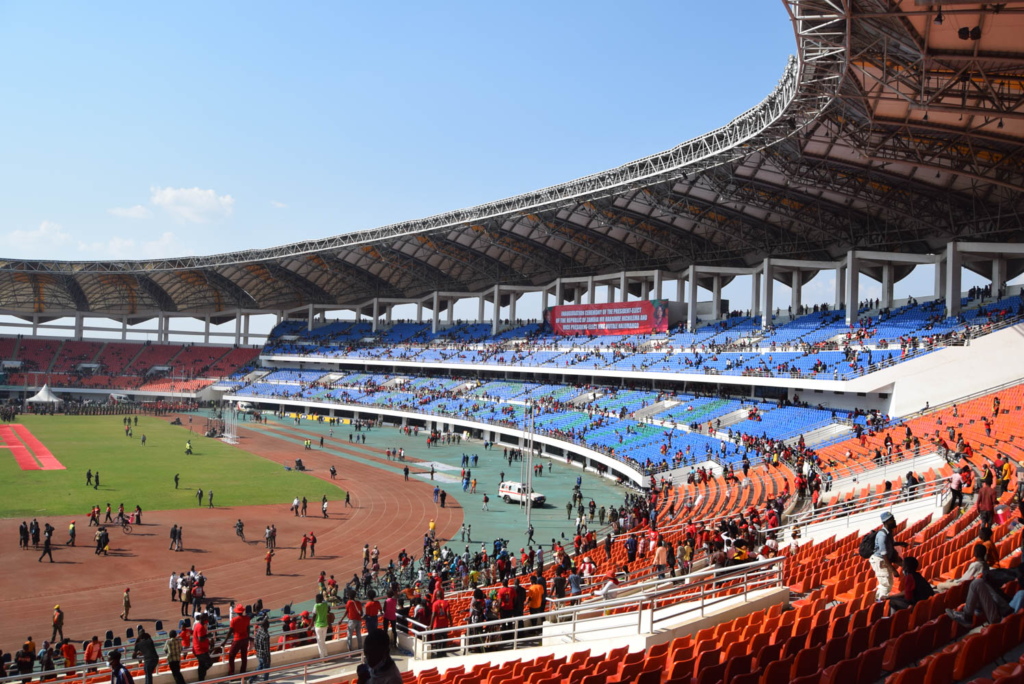
Almost every African nation has benefited from China’s Friendship Stadiums. These stadium projects, nonetheless, often generate mixed national sentiments. Sports-loving citizens enjoy the magnificence of these new stadiums: the glittering steel pillars that rest on a firm, strong concrete base, engineered by Chinese architects and structuralists. Others question their priority against numerous national issues that need equal attention. Citizens ask hard questions: “Why do hospitals lack beds, and children learn under a leaking roof”? The China-built Friendship Stadium in Cape Coast was projected to improve the sports infrastructure deficit in the Central Region, provide standard facilities for the competitive Central Regional inter-schools competition, and stimulate sports tourism through hosting national team matches and sub-regional tournaments. Despite its early appeal as a modern sporting facility, Ghana’s National Sports Authority’s (NSA) insouciant maintenance culture has reduced the Cape Coast stadium into a sub-par shadow of its initial paint and shine.
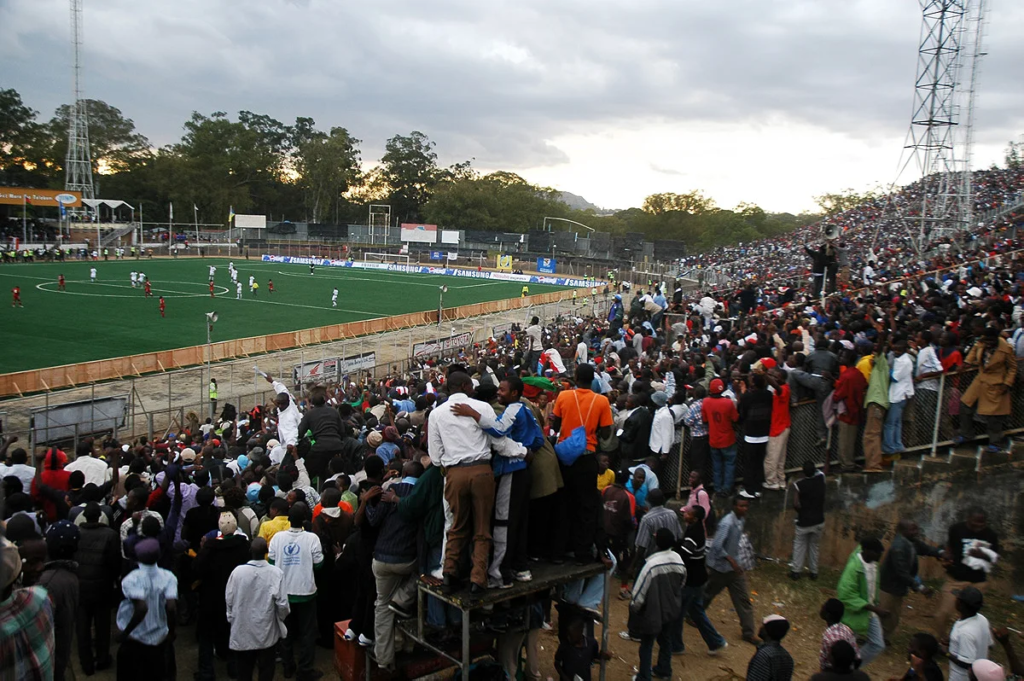
The Biya government spent extra funds in Cameroon on new stadiums as hosts in the delayed 2021 AFCON. Many believe the newly built Olembe Stadium is a political tool to divert the attention of Cameroonians from holding the government accountable for the economic and protracted Anglophone crises. Cameroun is battling identity politics, with violent conflicts in the territorially divided Ambazonia. Yet the newly constructed China-funded Olembe Stadium was prioritised over pressing national security and economic issues.
Source: Roads and Kingdoms
In contrast, Morocco’s successful bid to co-host the 2030 World Cup with Spain and Portugal is sparking global partnership talks, illustrating a forward-looking use of stadium investment in drawing new sports partnerships and international capital. The 2030 World Cup in Morocco is a practical marker of Africa’s sports infrastructure, culled from two decades of lessons and preparation since the first Africa-hosted World Cup held in South Africa in 2010. A World Cup in Morocco would cement its place as a pantheon of African sports. A successful 2030 El Mundial could project Morocco’s diplomatic influence and anchor its status as a regional hegemon in the Middle East and North Africa (MENA) on the back of recent leaps in world football, becoming the first African and Arab nation to reach the semi-final of a FIFA World Cup.
China’s friendship stadiums have found validation in Middle East diplomacy. Turkey’s diplomacy in Africa ties sports development as part of its international relations. Turkey’s reconstruction works in Somalia include upgrading sports facilities. As part of its wide diplomatic package, Qatar and the Gulf states are investing in sports academies in Algeria, Morocco, and Senegal, with promises of full-scale stadium construction.
The next time you watch a FIFA World Cup Qualifier on TV, or sitting in the stands of a national stadium in Cape Coast, Yaounde, Lusaka, Bamako, or the Benjamin Mkapa stadium in Dar es Salaam, look beyond the cheers and the boos. The stadium is a melting pot of diplomatic exchanges, state secrets and concessions. The stadium reflects the weight of complex political decision-making, picking winners, and neglecting priority areas like health, education, and roads. The biggest winner is China, which creatively influences political economy decisions in African governance in exchange for “stadium gifts” while advancing the Politburo’s well-minted global stadium agenda.
While African governments display these friendship stadiums as evidence of suave foreign policy making and diplomatic success, the real cost is the diverted resources and mounting aid dependency. Excessive foreign influence leads to shared sovereignty and neglected social needs in the long term. What is the counter-balance, who counts the cost, and what alternatives exist?
Welcome to the conversation.
Elorm Mawuli-Kwawu | Founder, Head/ Global Engagement
Foreign Africa