
Ivorians are gearing up for another election, but concerns about inclusion, legitimacy and stability are resurfacing. This analytical commentary examines the data, the politics, and the subtle signals behind what is considered West Africa’s most closely watched election in 2025.
As Côte d’Ivoire approaches its October 25 presidential election, tensions are rising in the world’s largest cocoa-producing nation, with early election observer reports expressing concern about an election already marred by controversies. Presidential elections always create anxiety among Ivorians. Imagery of bullet casings and biopics related to the 2002 and 2011 election crises is televised in homes, pubs, and the community. For West Africans, particularly, next-door neighbours like Ghana, the Ampain Refugee camp in Ghana’s Western region has been home to Ivorian refugees, mostly children and women who fled the crisis since 2002. Many Ivorians never returned home, and some, who became third-country nationals, acquired citizenship in other countries.
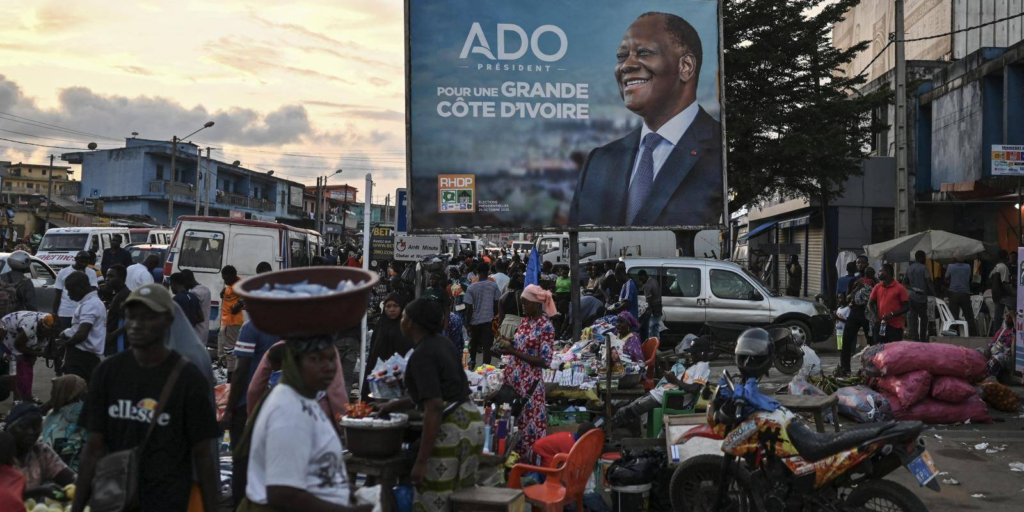
The Ivorian political economy is stratified, perhaps erratic, but relatively stable. Post-independent Côte d’Ivoire adopted a dirigisme, combining export-led growth with a liberal approach to international relations, facilitating a regular flow of financial and technical expertise from France and the West. Growth peaked on the back of cash crops, including cocoa, palm oil, and coffee; however, things came to a head with falling world commodity prices and rising debt levels during the structural adjustment era. A once-stable economy, which had grown in leaps and bounds in the 1960s and 1970s, crumbled, creating short-term hardships and social inequality, and reducing what analysts call the ‘Ivorian Miracle’ to a basket-case economy.
The death of its first president, Félix Houphouët-Boigny, in 1993 left a power vacuum, with several political factions battling for control. The contests quickly spiralled into a theatre of alternating civil and political violence, lasting until 2012. Post-war reforms and development followed immediately, guided by a New National Development Plan (NDP) that focused on economic diversification beyond cocoa and coffee; human capital investment, and governance reforms.
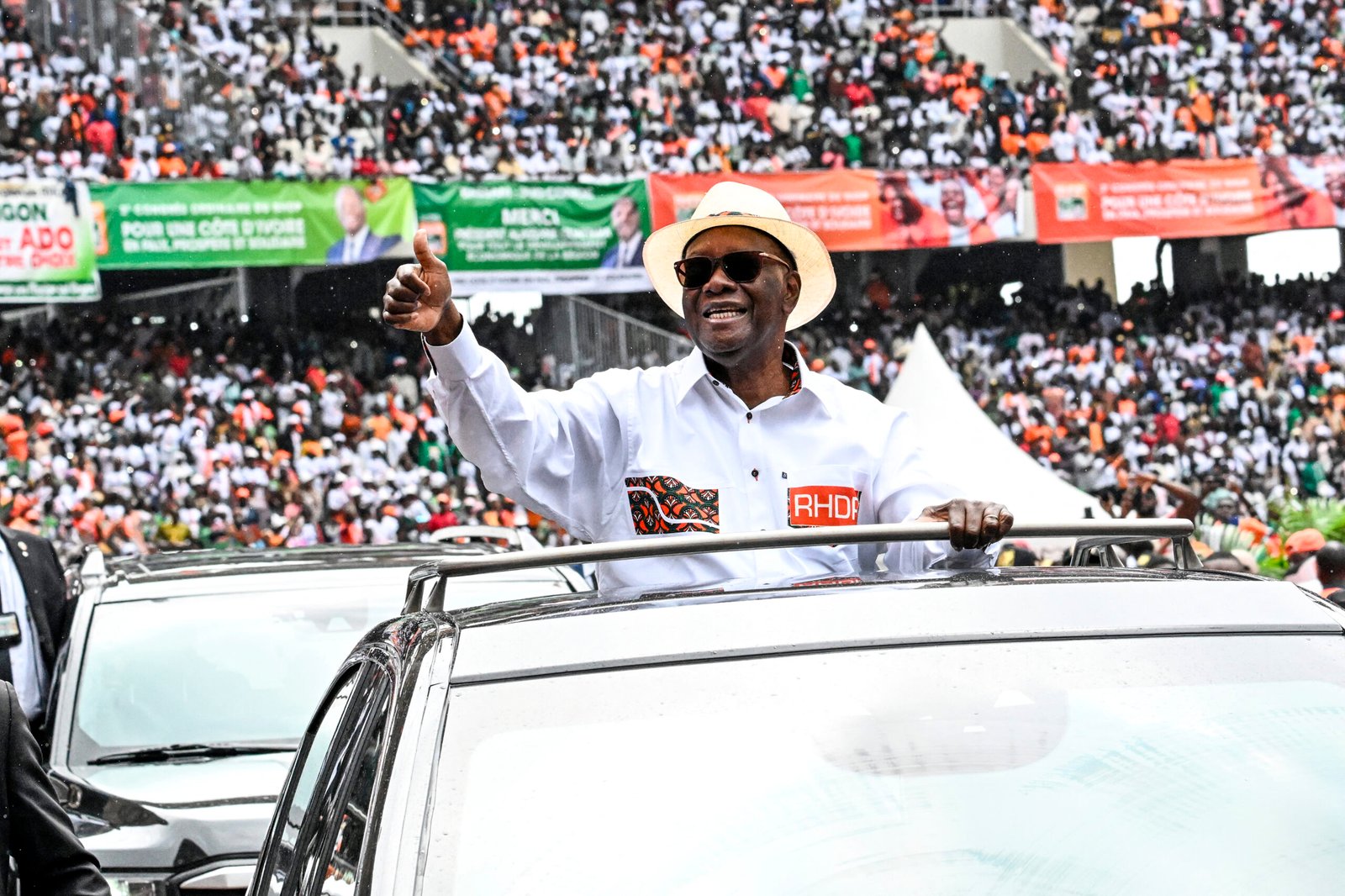
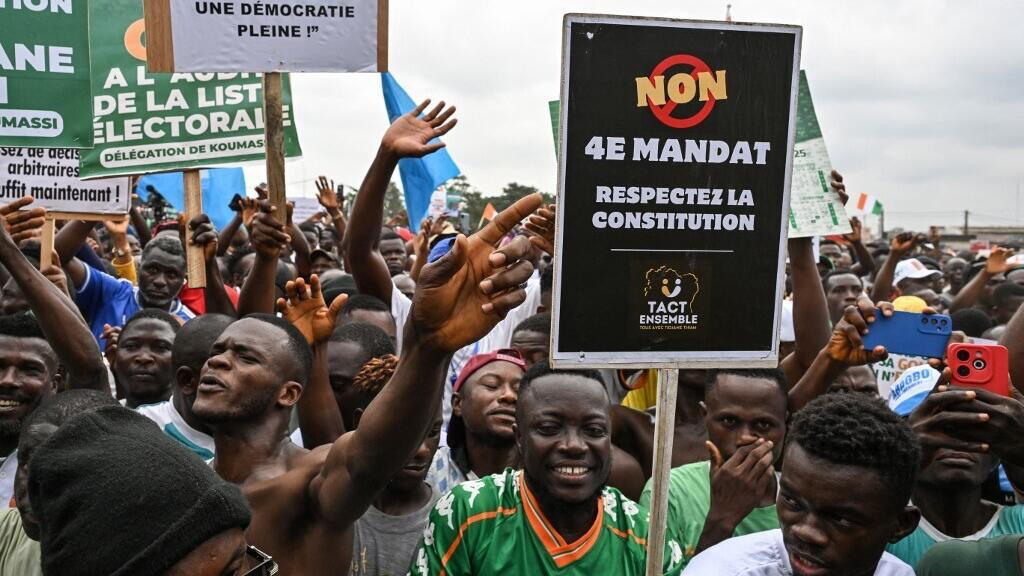
Côte d’Ivoire is one of the success stories of post-conflict reconstruction, but it is again gripped by tension. President Alassane Ouattara has been in office for 14 years. Ouattara’s fourth term is viewed as a democratic backslide and a disregard for term limits, but his supporters counter this claim, citing year-on-year economic growth and market efficiency. Many Ivorians point to a decade of remarkable transformation under President Ouattara, marked by new roads, improved infrastructure, and a GDP that averages 6-7 per cent between 2012 and 2023, one of the highest in SSA.
Critics decry it as a setback for democracy. The Ouattara administration justifies its continuity on the basis that his tenure has brought stability to a volatile region, and that a change in leadership could undo the hard-won economic and security progress, a rhetoric reminiscent of the old playbook, but consistent with the Francophone authoritarian style in West Africa.
Again, these macroeconomic gains are shadowed by increasing public weariness with the status quo, raising a fundamental question: how long can a single leader’s continuity be reconciled with the need for inclusive politics? The upcoming election is already defined by the exclusion of key opposition candidates, such as former Prime Minister Tidjane Thiam and ex-President Laurent Gbagbo, who were disqualified on legal technicalities. In a 2023 Afrobarometer survey, only 39% of Ivorians trusted the electoral body, and just 34% believed elections promote democratic accountability. When confidence falls this low, elections risk becoming empty national exercises rather than genuine expressions of the public will. The government’s own actions betray a deep-seated fear of unrest. The historic deployment of 44,000 security personnel, while officially a precaution, indicates a ‘battle-ready’ command for war, rather than a civil exercise.
Numbers and Narratives
The World Bank praises Côte d’Ivoire for its GDP per capita, which increased from $1,500 in 2012 to nearly $2,700 in 2023, and for its decline in the poverty rate from 46% to 36%. But inequality remains low, and unemployment among the youth is at an alarming 12 per cent. The Bank’s governance indicators released for 2023 show that Côte d’Ivoire scores higher for government efficiency but lower for press and personal freedom, as well as political accountability. This disparity in stable economic governance, juxtaposed with restricted political freedoms, illustrates the central contradiction of President Ouattara’s tenure.
A few key metrics are on the radar: voter participation, especially the youth demographic, constitutes over 60 per cent of the citizenry. A significant drop from the 54 per cent turnout in the 2020 election would communicate disinterest and indifference in the political process. Still, citizens make the best of it and find consolation in the economic progress the nation is making. Evidence from developmental neo-patrimonial states suggests that citizens can trade constrained political rights in exchange for economic benefits.
As the election draws near, the pressing concerns for the average Ivorian are straightforward: employment, the cost of living, safety and security. Although the country’s economy expanded by 6.2 per cent in 2023, the inflation rate for everyday goods was pegged at 4.8 per cent, with food inflation being the most affected. The government highlights its achievements in building infrastructure and maintaining a stable energy supply, yet widespread discontent persists over the lack of opportunities for rural populations and underemployed urban youth. The macroeconomic stability has not resulted in widespread, tangible improvements for the populace. This is what makes the 2025 election significant. It represents a public judgment on the equity of a model that has produced economic expansion, but has also led to vast resource misallocation and inequalities.
Final Thought
Côte d’Ivoire’s sketchy political past has led to killings, refugees, and chaos, caused by elections and electoral-related violence. Anytime elections draw near, the country reflects on the graves and mass burials, and the horror of dark history. Despite these recurring crises, regional organisations such as ECOWAS continue to fail in their mandate of communitarian security in the sub-region. ECOWAS is often cited for the selective application of its rules. The smaller countries bear the weight of ECOWAS’ sanctions, but states like Côte d’Ivoire, considered hegemons, wield significant influence in deflecting the same sanctions within ECOWAS. This raises the stakes of the elections regarding the efficiency of international election observation, the integrity of sub-regional groupings in ensuring a balance of order, and human security. The Ivorian election is another episode of the unfolding constitutional and unconstitutional hijacking of states in the sub-region, a reflection of the many challenges facing contemporary African states.
Welcome to the Conversation
Elorm Mawuli-Kwawu | Founder/ Head, Global Engagement
Foreign Africa