
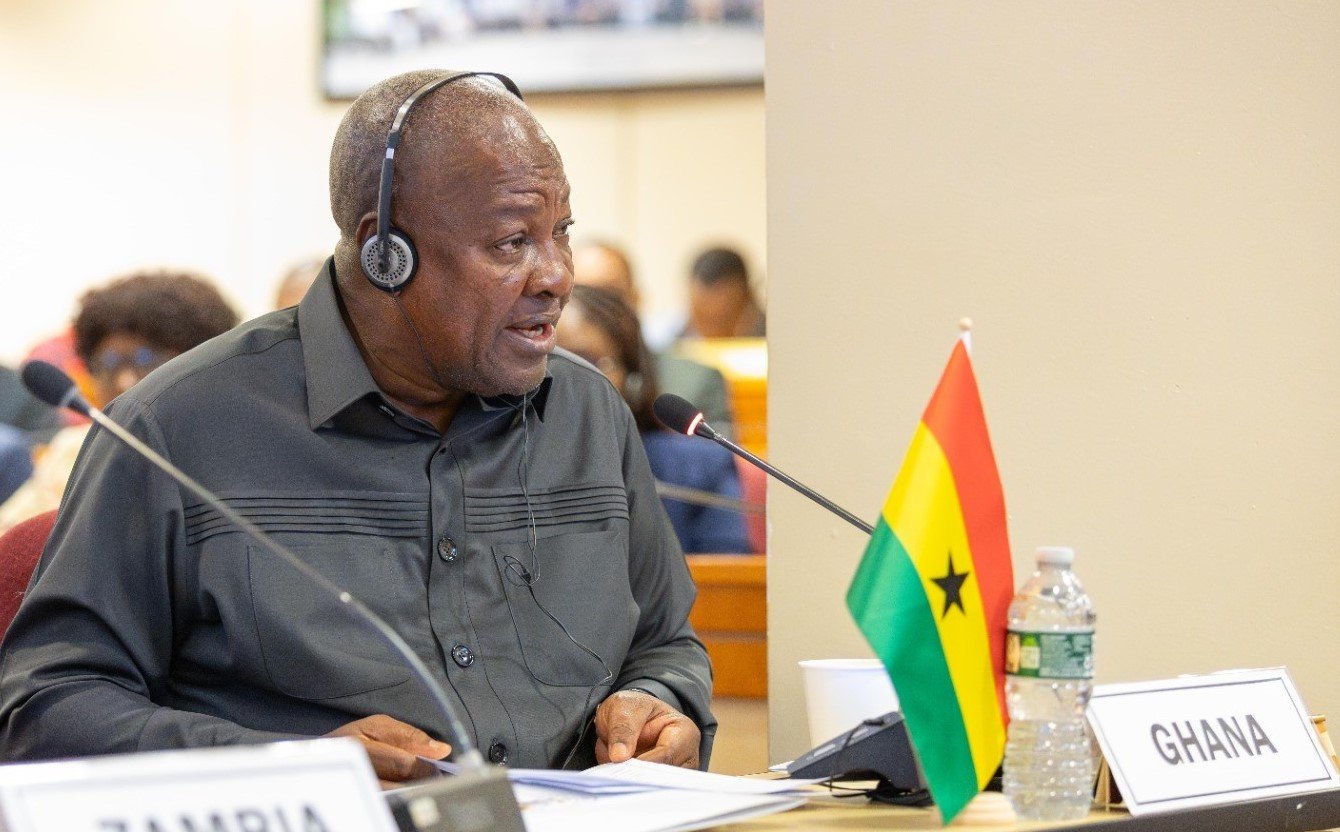
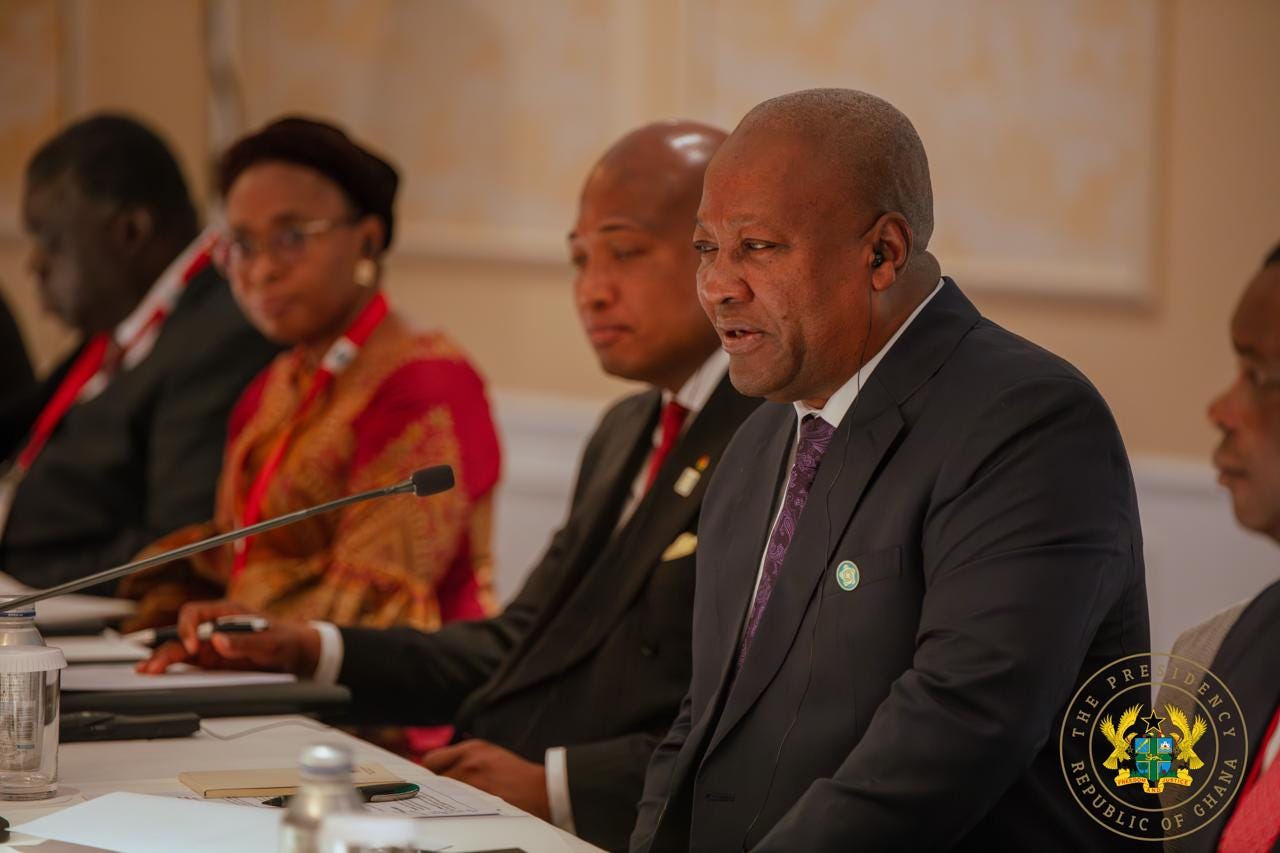
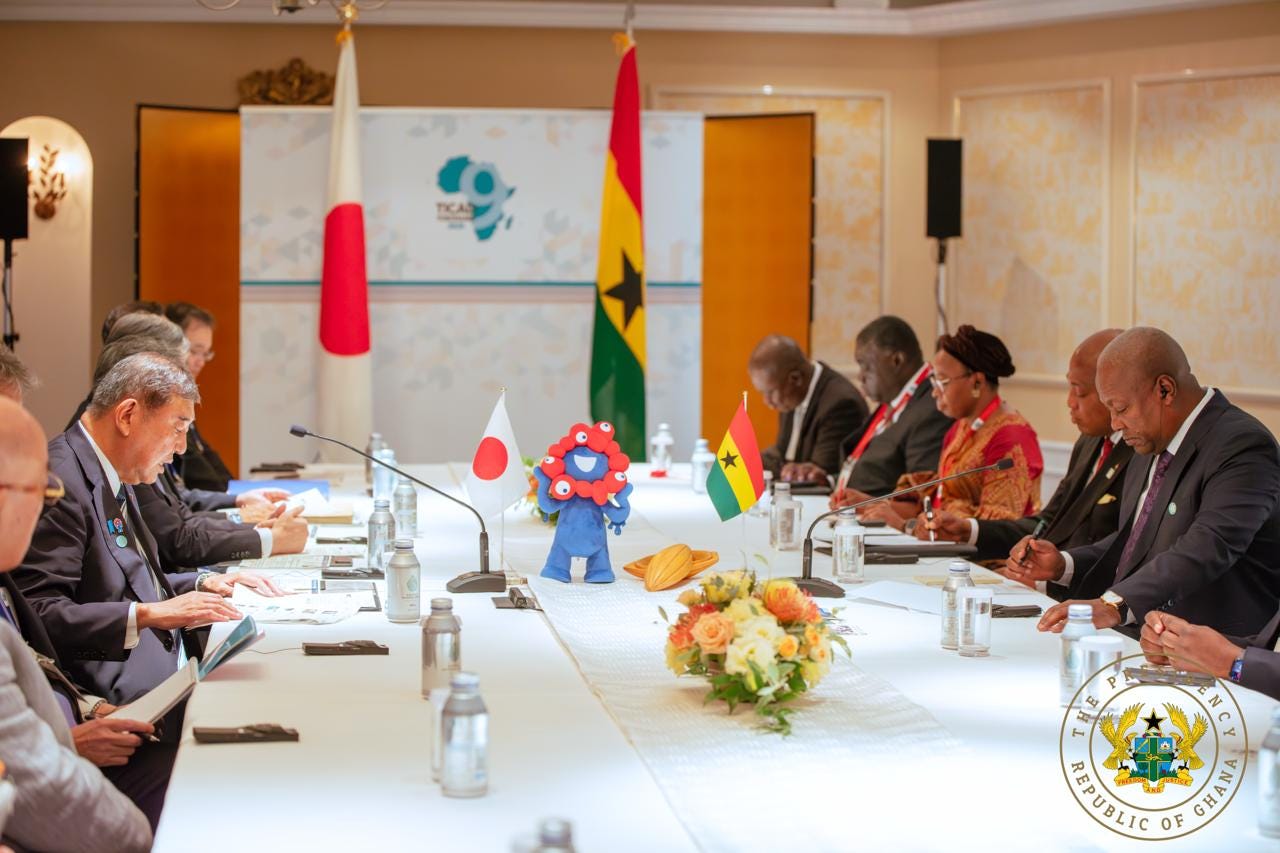
Ghana is repositioning itself as an investment-ready destination in the Global South. John Mahama’s two-week visit to the Asia-Pacific region is a bold and diplomatic turn in Ghanaian foreign policy. The Ghanaian president led a thoughtfully put-together delegation of government, industry and key actors on a state visit to Japan and Singapore. Traditionally, Europe, the US, and China have been the cornerstones of Ghana’s bilateral and multilateral relations. This triad has controlled the bulk of trade flows, project financing and exchange diplomacy with Ghana. The Asian continent, however, holds further diplomatic promise beyond this limited triangle.
The Asia-Pacific region is diverse and innovative, yet shaped by a stratified structure and autonomously embedded political economies. Many Asian countries operate a felicitous combination of state regulation and private sector participation, generating unique governance models that appeal to African governments. President Mahama’s choice of Japan and Singapore reflects a renewed focus on two innovation-driven economies, recognised as global benchmarks in developmental state-building, sovereign wealth creation and financial hub development.
Mahama’s entourage carried the energy and seriousness that development partners have always wanted from African leaders, a practical strategy for a win-win dialogue where African governments can walk home with billion-dollar investments in critical sectors. John Mahama’s team may have nailed it on the head this time.
Simon Madjie, the Chief Executive of the Ghana Investment Promotion Centre (GIPC), a well-minted investment promoter with prior working experience with the American Chamber of Commerce, delivered engaging presentations to the Japanese investor community on the 24-hour economy. In a calm, but deliberative manner reminiscent of seasoned trade negotiators, Simon pitched to the audience on the four pillars of the 24-hour economy: Grow 24 – (year-round farming), Make 24 – (Industrial Parks), Show 24 – (Tourism Connect 24 (Logistics Corridor Via Volta Lake).
The previous decade has been challenging for Ghana in terms of containing foreign investment. The tax regime, ease of doing business, and foreign exchange fluctuations plunged the economy to an unttractive low, shutting it out of global financial markets. Audit reports on the previous boss of GIPC, Reginald Yoofi Grant, revealed that GH50 million in travel costs alone from 2017 to 2023, along with leasing a private corporate edifice, which cost the taxpayer GH8 million in rents in two years, are raising worrying concerns about Ghana’s investment diplomacy.
These poor financial and infrastructure choices have disconnected GIPC from investor realities, such as the high cost of doing business in Ghana. This culminated in relocating scores of foreign job creation investors, from health and wellness, courier, and fast-moving consumer goods, to neighbouring states, while some folded up completely. As the John Mahama administration begins reforms, this financial inefficiency is not just a past mistake; it’s a test case on how Ghana restores institutional credibility and anchors the GIPC as a high-performing Investment Promotion Agency (IPA) in Africa, beyond mediocre conference rankings and investment meetings.
Although Ghana ranks 6th as an investor-friendly destination in Africa, its investment competitiveness is underappreciated, despite its democratic consolidation and tourism appeal. Ghana currently ranks low on global investment indexes like the FDI Confidence Index and the Legatum Prosperity Index, which measure investor confidence and FDI outlook. Now the GIPC has another spotlight opportunity to articulate investment narratives highlighting Ghana’s political stability and retail-consumption economy, elements often missing in Ghana’s investment promotion.
John Dramani Mahama enjoys an enviable grandstanding among his peers regionally and globally. Now the leader of a stable, partnership-ready Ghana, the president is on a strategic reset to make Ghana an investment pole with the Now Developed States (NDS), or what the World Bank technically calls the High Performing East Asian Economies (HPEAE). After a two-week business tour of Japan and Singapore, Ghana signed almost US$3 billion worth of investment agreements. The portfolio covers cocoa partnerships, infrastructure, road expansion (Volivo–Dorfor-Adidome corridor), agro processing and green hospitality.
The Foreign Minister mentioned the specifics of the deals on his official Facebook page. A space science agreement with Japan is expected to upskill 300,000 Ghanaian youth in emerging tech sectors over the next 24 months. The next Foreign Africa Africa Trade and Job Tracker would ascertain how these twin-state trade agreements, investment, and aid commitments translate into measurable employment and entrepreneurship opportunities for Ghanaian youth.
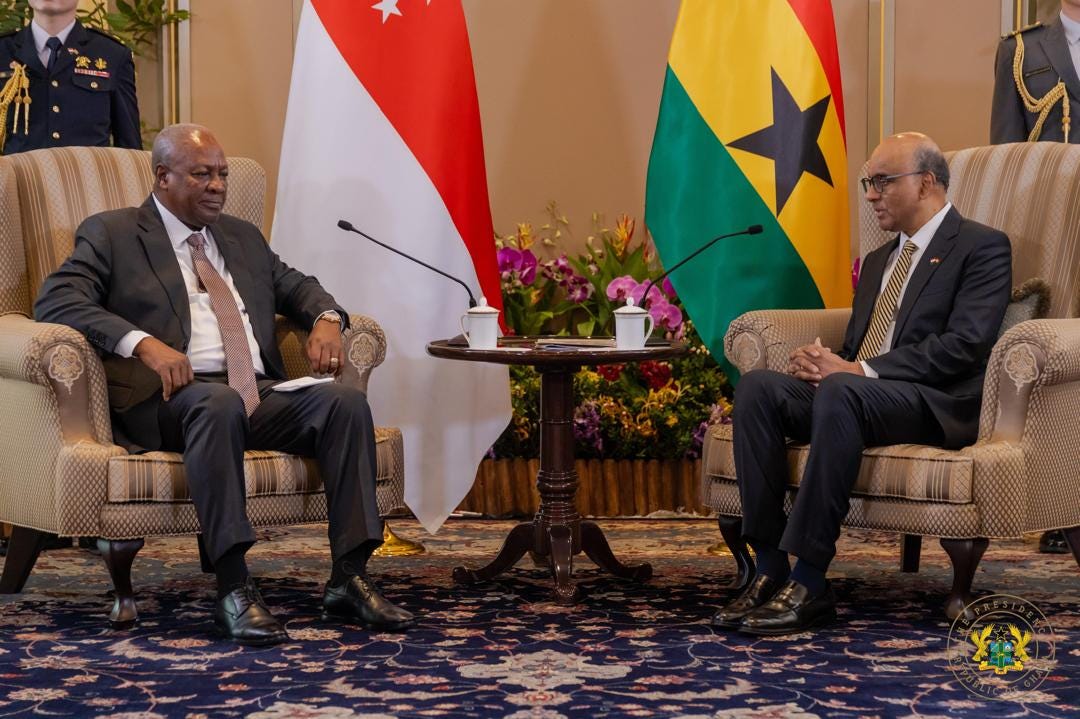
The president, while in Singapore, participated in the 8th Africa-Singapore Business forum, describing Africa as “investible”, and touting the much-talked-about USD $4 trillion Africa Continental Free Trade (AfCFTA) market, and Africa’s youthful demography as a viable labour market to be exploited. Despite ties dating back to the early post-independent leaders, Ghana has not nurtured strong and consistent diplomatic relations with Singapore. Ghana-Singapore trade as of 2024 is already $215 million, with a corresponding 50% increase in Africa-Singapore trade. Ghana’s policy circles often cite Singapore as a gold standard for institutional innovation and efficiency. Analysts are keenly observing President Mahama’s diplomatic style in intelligent foreign policy making, away from the orthodoxy of financial partnerships to country-twinning strategies to co-share and case-share lessons on governance and institutional discipline.
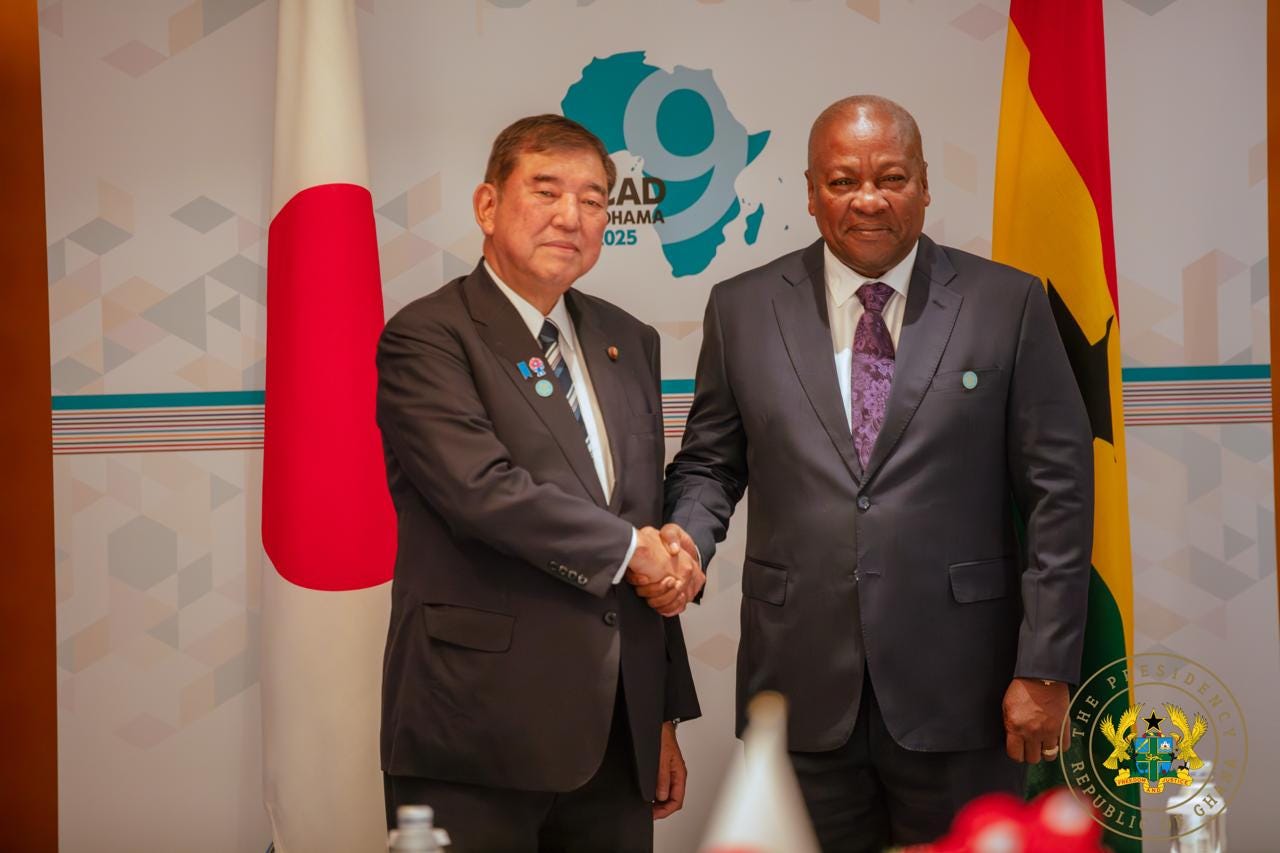
Japan, meanwhile, represents continuity through the Tokyo International Conference for African Development (TICAD). As a long-standing African partner, Tokyo is cutting through Beijing’s interest in Africa as it builds new bridges and commitments with African leaders. Tokyo, an innovative and futuristic capital, embodies Japan’s global comparative advantage in rail, technology and infrastructure. Japan’s choice is consistent with Ghana’s big push for major road rehabilitation and expansions, especially in cocoa communities.
Ghana is working to wean itself from the external oversight of the IMF, which has micromanaged its junketed economy for the last three years. As the country shows early promise of a rebound, John Mahama is diversifying Ghana’s global partnerships and adapting successful models to meet domestic priorities. The lessons are clear for the GIPC. It must rebuild trust and position Ghana as a serious investment corridor in the global economy. For Africa, Asia can also be a source of lessons on good governance and development. The choice is not to look East or West, but forward.
Welcome to the conversation
Elorm Mawuli-Kwawu | Founder, Head/ Global Engagement
Foreign Africa