
Donald Trump’s plan to re-vet 55 million foreigners is steeped in his belief that crime in the U.S. is carried out by immigrants from Africa, Asia and Latin America. These remarks could easily be verified through the library of public statements the POTUS made about immigrant populations living in the U.S. These statements have targeted people from Mexico, some African and Asian states, and parts of the Middle East. But how accurate is this belief, claim? Remarks?
A National Institute of Justice (NIJ) study conducted in 2025, which examined nearly 58,000 people held by Immigration and Customs Enforcement (ICE), found that 71.7% had no criminal history. Very few who had a criminal history had never committed any violent crime. Other organisations, such as the Cato Institute, drawing on the federal Deportation Data Project, conclude that more than half of the immigrants rounded up by the Trump administration have no criminal record. That’s more than 30,000 people in detention without a criminal history. The tension here is not between data and policy, but between data and perception.
Thanks for reading FOREIGN’s Substack! Subscribe for free to receive new posts and support my work.Subscribe
The U.S. government is oiled with a structured intelligence architecture that receives regular and reliable data, informing most federal decisions. The same data from parallel federal agencies inform economic, trade, security and broader foreign policy decisions. Why are political rhetoric and public fears, other than reliable statistics, shaping immigration policies?
I do not try to make an assumption or speculate beyond what the White House terms “national security” reasons for its sweeping immigration reforms. If these reforms were lifted off the page, they would constitute the most significant immigration reforms in 300 years. Immigration lawyers have already described this re-vetting as cumbersome. Analysts warn that extending the revised rules to include applicants’ social media histories, tracking activist records, and perceived anti-American sentiments feels like a regression to centuries-old practices. It revives debates on the rights of migrants and could have far-reaching consequences for many.
Those most affected would be African Students. A UNESCO source says are 400,000 Africans currently studying in the U.S. Earlier this week, the State Department disclosed that 6,000 students have had their visas revoked. These students who represent the continent’s brightest talents face uncertainty about their future. Many African students study on government scholarships, but most are recipients of external funding with stringent visa rules. Any revocation or anything that interferes with the immigration status of a student affects the continuous financing of their education. The financial cost of sending an African student to the U.S., already on scholarship or fellowship, is staggering. Hidden costs include airfares, warm clothing, initial living expenditure, and medical insurance, which stretch household limits.

Many African families pool resources to send their sons and daughters abroad to work to catalyse and improve their lives back home. The stakes are not only educational, they are connected to livelihoods back in Africa. The African diaspora contributes over USD $100 billion in remittances annually, which is more impactful and higher than foreign aid and FDI flows into the continent. Remittances fund school fees, housing projects, medical bills, micro-enterprises, and community welfare. They flow straight into households, without bureaucracy, corruption, or delay. Any disruption in visa security threatens these flows, directly affecting household income and national economies.
Significant foreign policy changes require a response, as is the practice in international relations. Foreign policy connoisseurs have been enquiring about the collective African position on Trump’s new immigration direction. The African Union has yet to make a statement. The AU has a tradition of putting out feel-good reactive circulars on its diplomatic positions. An AU statement in June 2025 only expressed concern. It urged dialogue with the U.S. when some selected African states, most from the Horn of Africa, were imposed with harsher immigration rules by the Trump administration. This pattern of standard-cyclical reproduction of diplomatic templates cannot bear any results on the current hybrid global diplomatic axis. The AU’s exercise of reactive diplomacy would be its own undoing, which questions its agency! So much for the often-repeated catchphrase “African agency”. Yet these questions remain unanswered.
1. How do African governments or the AU collectively express African agency?
2. Does the African agency express itself only during economic dialogues? Or climate talks?
3. Or voting as a bloc on Iran Nuclear Deals or the massacre of Gaza?
4. What does the AU’s silence on this broader policy say about its diplomatic strategy or priorities?
5. Is this lack of response due to limited capacity, competing agendas, or a tactical decision?
The difference with the European (EU) Union could not be more apparent. Brussels collectively negotiates agreements and shapes the outcome of immigration as a bloc. Africa, in contrast, drifts into global immigration negotiations as 54 disparate, uncoordinated micro-units, weakening their leverage. Out there lies a foreign policy snapshot of Africa as a bland, cold, lethargic observer in the political economy of international migration. And the response? NOTHING SERIOUS.
Like the EU, the African Union needs a unified foreign policy position. A starting point is instituting a working group to do a rough sketch of what could become a code book on global commons, like international migration. Times are different, and Washington is rewriting the rules on global immigration. But who is the man in charge? Donald J Trump
Donald J. Trump is the leader the United States needs at this moment. You know why? He understands that the MIGHTY United States is in decline. Once considered an archetypal political system that could withstand anything and auto-correct human defects. There have been cracks, but now they are visible, and somebody must fix them.
Trump, a billionaire businessman and political maverick, occupies the nerve centre of global politics. Decisions taken at the Oval Office could go as far as impacting the medical supplies of an amputee receiving treatment in post-war Sudan because of an executive order to suspend USAID global operations. Trump has openly expressed dissatisfaction with previous U.S. presidents, notably Obama and Joe Biden, for not doing much to expand the U.S. economy. Economy, jobs and immigration were the key issues that decided the 2024 U.S. elections.
Many indices rank the U.S. low in healthcare, wages, crime, and freedoms. A recent blog post described the U.S. as a lawyering state whose engineering precision has dwindled, and its unrestrained capitalism has been hijacked by large corporations and consortia, distorting prices and rates, deepening inequality. Senator Bernie Sanders and Elizabeth Warren, former presidential nominees for the Democratic Party, have repeatedly flagged as dangerous why the top 1% control America’s wealth while the bottom 99% wallow. Education is in decline as China has expanded its cultural and educational exchanges globally, which is predicted to replace the U.S. as the premier destination for foreign education in the coming years.
For Trump, it is immigration first; audit and sanitise the system for economic revival. Tariffs and taxes have already taken effect. This is economic nationalism in its protective gear. A reminder of the first 100 years of America’s development, where protection rather than cooperation was preferred.
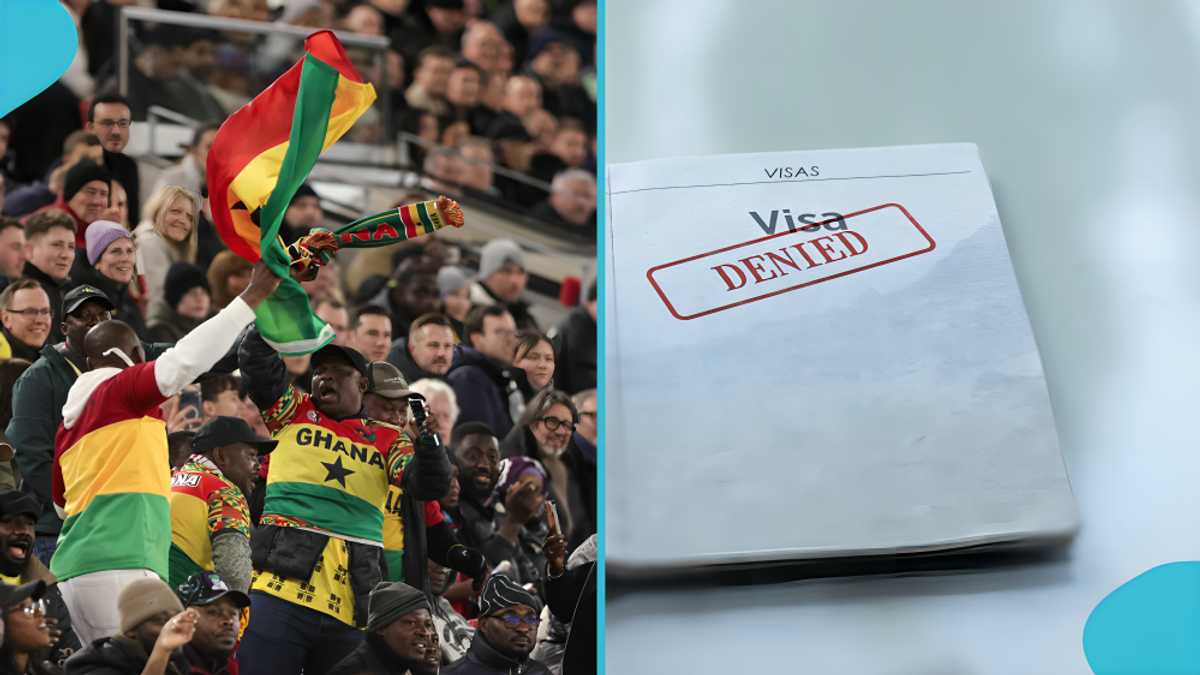
But. This is America’s immigration-foreign policy praxis. And Africa? Where is the agency? The African agency has been one of the central ideas in African development planning for decades. At its core, it means the capacity to control and exert power. However, the African agency is tested when powerful external actors dictate the mobility terms for millions of African citizens. So far, African governments have responded weakly to restrictive immigration policies from the U.S. and Europe. Visa bans, deportations, and mobility restrictions are met with protest statements, but rarely with coordinated diplomatic action.
African agency requires decisive, coordinated engagement with global migration rules.
Welcome to the Conversation
Elorm Mawuli-Kwawu | Founder, Head/ Global Engagement
Foreign Africa