
Across Africa’s national teams, coaching choices reveal deeper questions about how institutional design, status politics, and the limits of self-belief shape coaching appointments in African football.
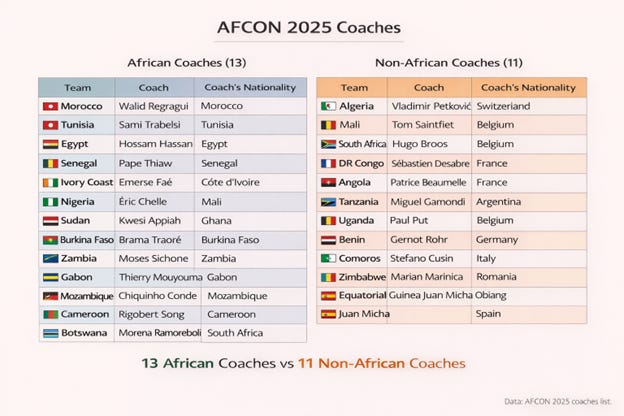
Two days before the tournament began in Morocco, CAF released a graphic featuring the head coaches of the 24 participating national teams. Fourteen of them are African nationals. Two are Africans coaching countries other than their own. The rest are foreigners, mostly European. By recent standards, this is one of the most balanced coaching line-ups in AFCON history. And yet, even this apparent progress raises an uncomfortable question. Why does African football still struggle to trust African coaches?
Across the continent, national team coaching remains one of the clearest examples of Africa’s enduring preference for foreign expertise. This preference persists despite an inconvenient and straightforward fact: African coaches have been just as successful as their foreign counterparts at AFCON. Historically, they have won the same number of titles. Over the last two decades, despite being heavily underrepresented in appointments, African coaches have narrowly outperformed their foreign counterparts in tournament victories.
So why does the bias endure? The answer lies in how coaching is understood and governed in African football. Too often, it is treated as a purely technical role, detached from politics, history, and institutional power. That framing is not only incomplete. It is misleading.
Two competing ways of seeing the coach
Debates about national team coaching often revolve around two overlapping yet competing logics.
The first treats coaching as a service in a global labour market. In this view, nationality is irrelevant. Coaches are hired based on perceived merit, often translated into European certification, experience abroad, or association with elite leagues. The coach is a neutral technician. Cultural familiarity, historical symbolism, and political meaning are secondary, if not irrelevant.
This logic dominates official discourse. Football administrators invoke professionalism, objectivity, and international standards. Yet in practice, “merit” is rarely neutral. It is often externally validated, typically European, and rarely homegrown. Even where fans express support for local coaches, doubts about their suitability for the “highest level” persist due to constant comparison with European coaches.
The second logic is more political and more uncomfortable. It treats national teams as symbols of collective identity, history, and aspiration. This view has deep roots in Africa’s anti-colonial and Pan-African traditions. Football was never just a game. It was a site of representation, dignity, and struggle. The Pan-African boycott of the 1966 World Cup, staged in protest against FIFA’s discriminatory allocation of slots, reflected this understanding. Within this tradition, the question of who leads African national teams is not a trivial matter. It is about authority, trust, and self-belief. Nowhere do these tensions appear more clearly than in Ghana.
Ghana and the contradictions of self-belief
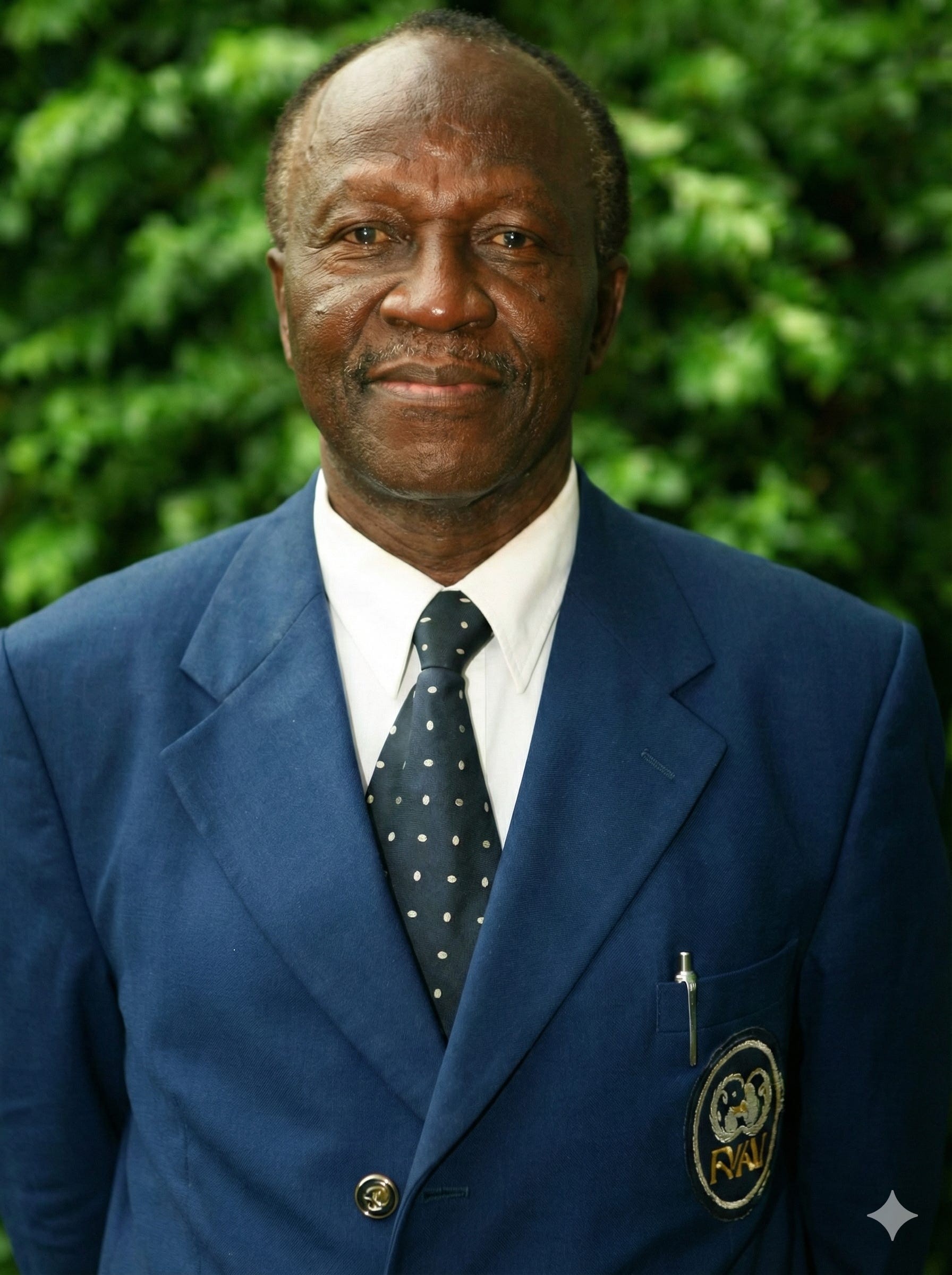
Despite its strong nationalist and Pan-African foundations, Ghana has consistently favoured foreign coaches for the Black Stars. Since the team’s formation in 1958, the majority of substantive coaching appointments have gone to non-Ghanaians, mostly Europeans. When repeat appointments are taken into account, the number of Ghanaian coaches becomes even smaller. Average tenures are short. Confidence is thin. Yet this was not always the case.
In the early post-independence years, Ghana pursued a deliberate succession strategy. After an initial period under European coaches, the state invested in training Ghanaian professionals abroad. By 1963, when Ghana hosted the AFCON, C. K. Gyamfi returned from Germany to become the first Ghanaian professional coach of the national team. He led the Black Stars to back-to-back AFCON titles in 1963 and 1965 and later added a third in 1982. No Ghanaian coach has replicated that success since.
The break came after the overthrow of Kwame Nkrumah in 1966. Gyamfi was dismissed and replaced with a young Brazilian coach with no top-level experience. In his autobiography, Gyamfi later described the episode as a manifestation of an inferiority complex. The diagnosis still resonates.
More than four decades later, Ghana is yet to win another AFCON title.
Status, symbolism, and second-rate imports
Over time, the foreign coach has evolved into a symbol of prestige within African football. Hiring from Europe signals seriousness, ambition, and a modern approach. But in reality, African football rarely attracts elite foreign coaches in their prime. Cost, risk, and prestige all matter.
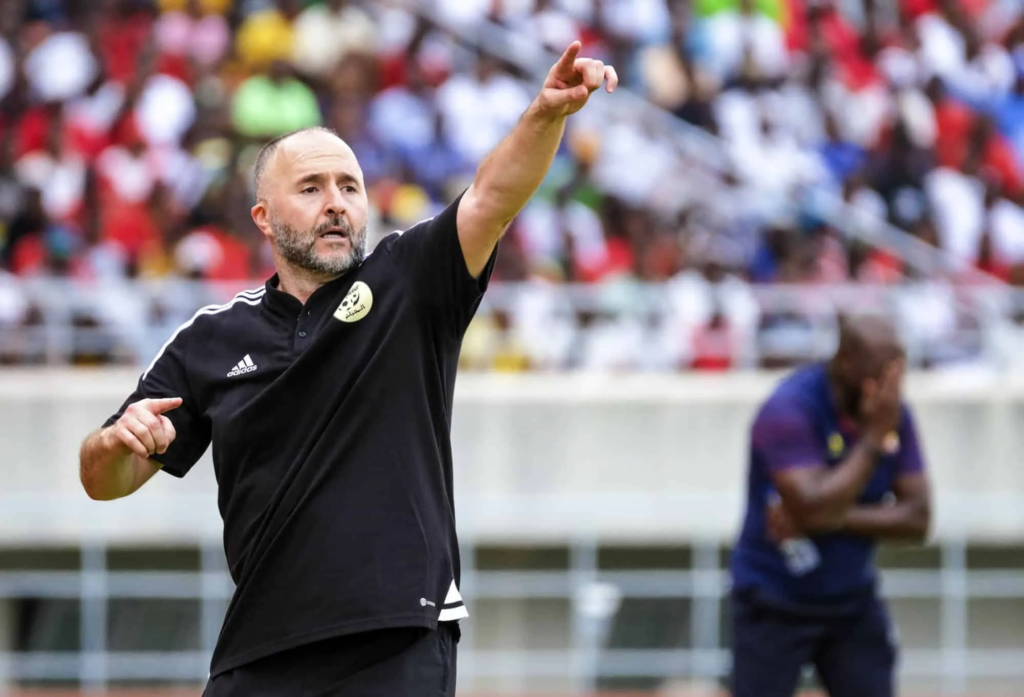
Instead, football associations frequently compromise. Mid-level or inexperienced foreign coaches are hired at premium cost, while local coaches face lower pay, smaller technical teams, and limited institutional patience. Failure is personalised. Success is rarely credited to local capacity.
An epistemic bias reinforces this hierarchy. Foreign expertise carries an aura of authority even when evidence does not support its superiority. Indigenous football philosophies remain marginal, undervalued, and undocumented.
In Ghana, for instance, E. K. Afrane’s “nnoboa” system drew inspiration from cooperative labour practices in rural life. It emphasised collective responsibility over individual brilliance. Similar to how European philosophies like tiki-taka or gegenpressing became codified and exported, nnoboa represented a locally grounded way of thinking about football. That such ideas never gained continental or global traction speaks more to whose knowledge is considered legitimate than to their quality.
African coaches have not been silent in the face of this imbalance. Few embodied resistance more clearly than the late Stephen Keshi. He led Nigeria to AFCON victory in 2013 and remains the only African coach to qualify two different countries for the World Cup.
Yet even Keshi was not immune to prejudice. After qualifying Togo for the 2006 World Cup, he was dismissed before the tournament and replaced by a European coach. Togo lost all three matches. The irony was unmistakable.
Keshi later captured the frustration succinctly: Africa, he argued, should not accept mediocre foreign coaches in the name of progress. If excellence is the standard, then it must be applied honestly.
Similar frustrations have been echoed by other African coaches, who describe professional environments defined by unequal contracts, limited support, and constant suspicion. The message is consistent: African coaches are expected to outperform under conditions that are designed to fail them.
The Institutional Problem: Rethinking Trust, Not Talent
At its core, this is not simply a matter of preference or prejudice. It is a governance failure.
African football associations occupy a complex and ambiguous space. They are private entities under FIFA statutes, yet they heavily depend on public funds to operate their national teams. This blurs accountability. States pay the bills without shaping long-term development priorities. Football administrators wield authority without financial responsibility.
Within this arrangement, foreign coaches become convenient buffers. Hiring from abroad shifts risk, deflects criticism, and absolves institutions of responsibility for building local capacity. The result is a self-reinforcing cycle: public resources subsidise external labour markets while domestic expertise stagnates.
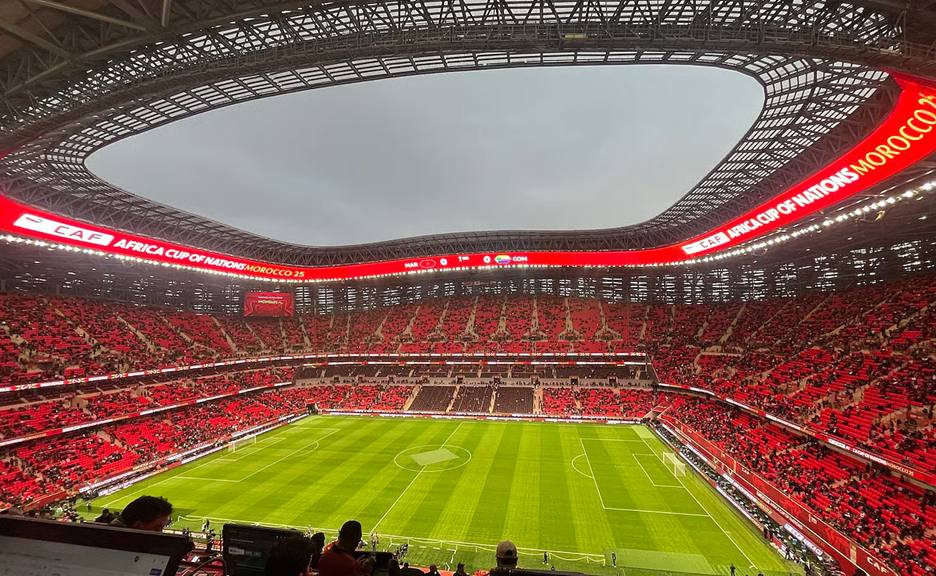
AFCON reminds us that the coaching debate is not about rejecting foreign expertise. It is about understanding why African expertise remains systematically underdeveloped, undervalued, and distrusted. Breaking the cycle requires more than rhetoric. It demands coherent policy, long-term investment, and institutional courage. Coaching, like playing, is a craft that matures through trust, failure, and continuity. Until African football confronts the political economy behind its coaching choices, the paradox will remain. Africa will continue to produce talent on the pitch, while doubting itself on the touchline.
The question, then, is not whether African coaches are good enough. It is whether African football is willing to believe they are.
Welcome to the Conversation
Abdul Karim Ibrahim | Narrative Lead
Foreign Africa